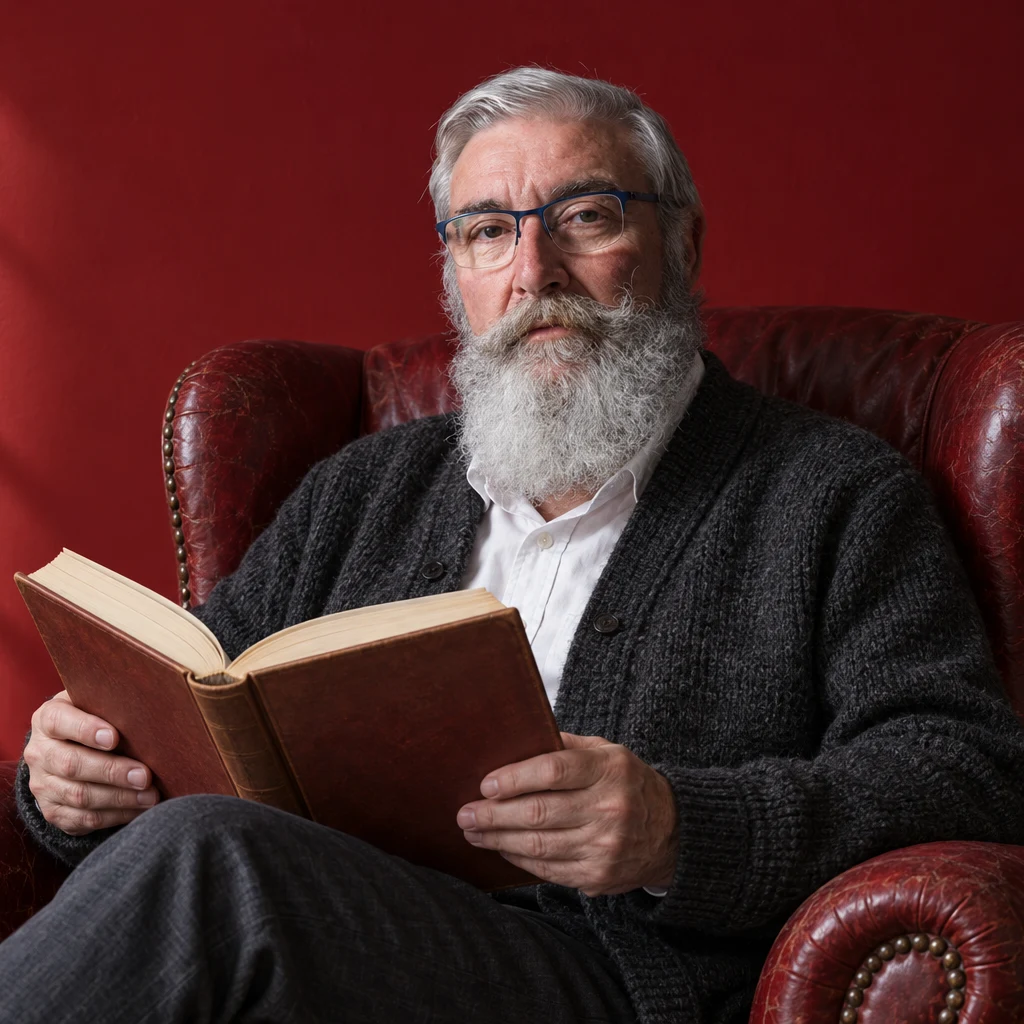
Jeremy Payton is a scholar of religious studies and the author of The Complete Apocrypha, The Books of Enoch, The Gnostic Gospels and The Book of Revelation. His subject is the writings the canon left outside: the Apocrypha, the pseudepigrapha, the gospels of Nag Hammadi. Scribes copied them faithfully for centuries; then tradition let them go. His work returns them to the reader who knows their names but has never held them.
Where it began
He grew up in England, in a household of educators, where a question was something you followed rather than settled.
The ancient scriptures reached him young, when most people hear what to believe and few ever see the documents. He read them, and then he read what stood behind them: the languages, the histories, the manuscripts themselves. A text survives two thousand years by an improbable road, and that road, rather than the destination, became his subject.
How he works
His method is unglamorous but exacting. He returns to the texts, sets them beside their neighbors, and weighs what the manuscripts say against what tradition remembers. Where the two differ, he reports the difference.
He does not blur the canonical and the apocryphal, and he does not dress belief up as knowledge. He says what the evidence supports, and he calls conjecture conjecture. Where the record contradicts itself he says so, because the contradictions are often where the history hides.
Still, the rigor is not a wall. Complex theological material arrives in plain prose, so specialists and curious readers follow him equally well. For Payton, ancient scripture is not an antiquarian curiosity but a pursuit of understanding: writings from two thousand years ago still speak with precision, and often with discomfort, to the reader who approaches them today. His invitation is a simple one: come and see for yourself.
The books
Each volume gathers writings that most people have heard of but few have read. The conviction behind all of them is the same: these texts need no sensationalizing to astonish. Hand a reader the actual words, with the context they need, and the case makes itself.
- The Complete Apocrypha — the fullest gathering of the texts that stood just outside the canon.
- The Books of Enoch — the watchers, the fallen angels, and the apocalyptic tradition they set in motion.
- The Gnostic Gospels — the Nag Hammadi writings and the Christianity they preserve.
- The Book of Giants — the fragmentary Enochic work from the Dead Sea Scrolls.
- The Gospel of Mary Magdalene — the surviving portions of a gospel that gives her a teacher’s voice.
- The Gospel of Thomas — sayings the tradition assigns to Jesus, without narrative and without commentary.
- The Book of Revelation — the vision that closes the New Testament, on its own terms.
What you’ll find on this blog
The articles fall into eleven sections, one for each body of texts:
- Apocryphal Studies — what the word means, and what it has hidden
- Deuterocanonical Books — Tobit, Judith, Wisdom, the Maccabees: inside some Bibles and outside others
- Enoch and the Watchers — the fallen angels and the rebellion Genesis only hints at
- Giants and Nephilim — one ambiguous sentence in Genesis, a whole book at Qumran
- Gnostic Beliefs — a world with a maker who is not God, and the gospels that taught it
- Sayings of Jesus — the Gospel of Thomas, saying by saying
- Mary Magdalene — the woman behind the stories other people told about her
- Early Christian Writings — the two centuries before there was a New Testament
- Revelation Explained — the images of the last book of the Bible, one at a time
- Apocalyptic Visions — the genre Revelation belongs to, and its rules
- Second Temple Judaism — the world behind all of these books
The newest articles are on the blog page.