
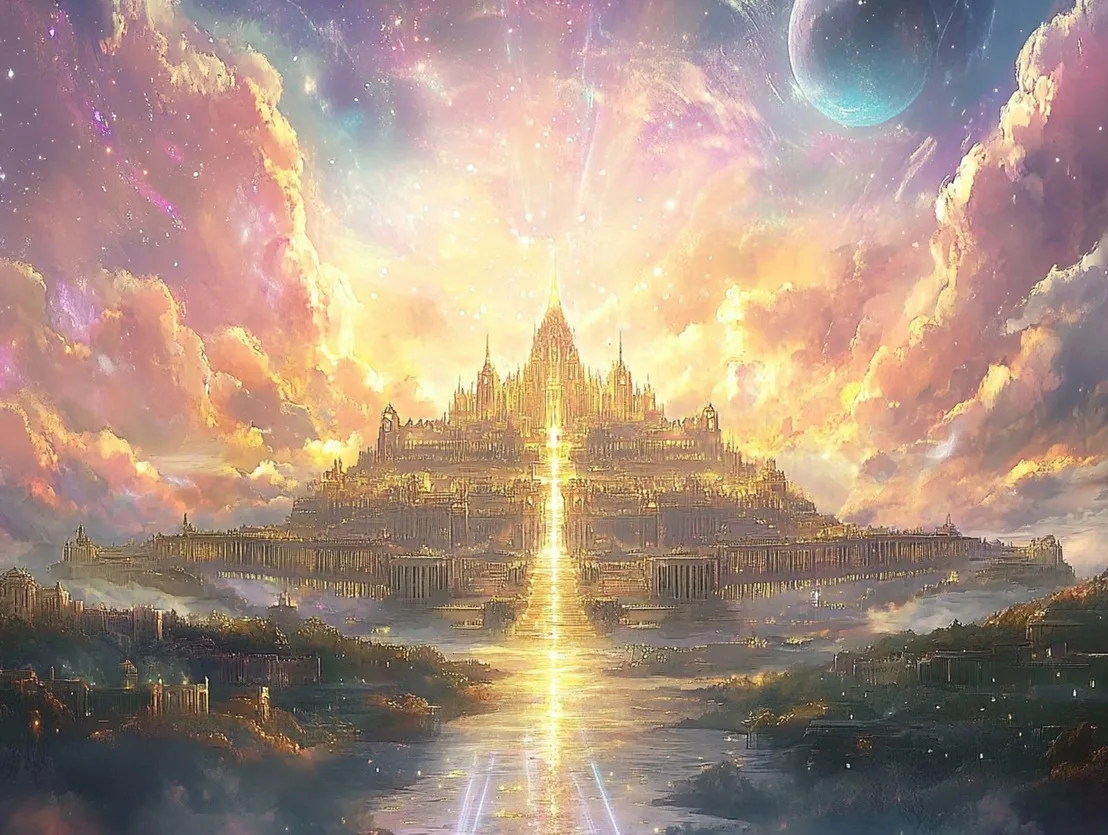
The new heaven and new earth arrive late in Revelation, and they arrive only after everything else has gone. The old sky and the old ground flee from the throne. Death and Hades are thrown out. Then John looks up and sees a new heaven and new earth.
He does not see souls floating off to somewhere better. He sees heaven and earth together, changed. So the old question follows at once: does God scrap the world and start again, or does he mend the one we have?
Where John Was Standing
The writer calls himself John and says he was on Patmos, a small island in the Aegean, because of his witness to Jesus. He wrote in Greek to seven churches in the Roman province of Asia. Most scholars place the book in the mid-90s, under Domitian, though some argue for an earlier date.
His readers lived inside Roman trade, Roman temples and Roman festivals. So his pictures of beasts and fallen cities were never only about the far future. They were about the empire outside the door, and the churches heard them that way.
The vision of Revelation 21 comes straight after the great white throne in chapter 20. There, earth and sky flee from the face of God and no place is found for them. Then John writes that he saw a new heaven and a new earth, because the first ones had passed away, and there was no longer any sea. The cosmic battle in Revelation tells the long story that ends here.
The order matters. Judgment comes first and new creation follows, so the new world is not the old one with a fresh coat of paint. It is the world after death has lost.
Isaiah Said It First
John did not invent the phrase. Isaiah 65 and 66 both promise new heavens and a new earth, and those are the only places in the Hebrew Bible where the exact words appear. The chapters date from the years after the exile in Babylon, when families came home to a ruined Jerusalem and tried to rebuild.
Isaiah’s picture is very earthy. People build houses and live in them. They plant vineyards and eat the grapes. Nobody dies young, and nobody loses the fruit of their work to a stranger. It is renewal of towns, farms and families, not the end of the planet.
John borrows the words and pushes them further. Isaiah still has people dying at a great age, while John says death itself is gone. And the setting has changed too, because Isaiah spoke to returning exiles and John speaks to small churches under an empire. Revelation’s new beginnings follows that thread from start to finish.
The Hope Between Isaiah and John
In the centuries between the two, Jewish writers kept coming back to the same hope. They did not agree on a single map of the end. They wrote visions, retold scripture, wrote rules for their communities, and argued.
The Book of Enoch comes closest to John’s words. In its Apocalypse of Weeks, the first heaven passes away and a new heaven appears. Jubilees ties renewal to a clean sanctuary where God lives with his people. Fourth Ezra and Second Baruch, both written after Rome burned the temple in 70 CE, look past the disaster to a better age.
The Dead Sea Scrolls add another angle. One of the Qumran rules speaks of the making of the new, but it means cleansing a community of sin as much as changing the cosmos. So new creation could mean a new world, a new temple or a new heart, depending on who was writing.
Then the New Testament has one more witness. Second Peter 3 sees the heavens pass with a roar and the elements melt in fire, and then a new heaven and new earth where justice lives. It sounds hotter than Revelation. Yet both writers insist the new world is marked by what is right, not just by what is shiny.
Is the New Heaven and New Earth a Replacement?
The Greek word John uses for new is kainos. It usually means new in kind or quality, while neos tends to mean recent or young. The words overlap, so grammar alone cannot settle it, but kainos fits a world transformed better than a world built from scratch.
The verse about the first heaven passing uses a plain verb for going away. Paul uses the same kind of language when he says that anyone in Christ is a new creation, the old gone and the new come. Paul is talking about people rather than the cosmos. Still, the pattern is the same, because something real changes and something real carries on.
Then comes the line from the throne itself. God says, I am making everything new. He does not say, I am making new things. The sentence is about the whole being changed, not about every object being swapped for another.
Early writers read it that way too. Irenaeus said the outward form of the world passes while its substance remains, and many modern scholars agree. A smaller tradition, some medieval and some modern, reads the fleeing earth as a real ending and a second creation from nothing. That view takes the break seriously. But it has to explain why the new world still has earth, peoples, kings and a city with a name.
Why the Sea Is Gone
Many readers stop at the line about the sea. People love the ocean, and a world without one sounds like a loss. The ancient world felt differently, because the sea drowned sailors, swallowed trade and could not be tamed.
Genesis begins with darkness over the deep before God orders the waters. Psalm 74 remembers God breaking the heads of the sea monsters and crushing Leviathan. Babylon had its own story of Marduk splitting the sea goddess Tiamat. So when John says the sea is gone, he is using a very old picture of chaos.
He also has a sharper reason. In chapter 13 the beast of empire rises out of the sea, and with the sea gone the beast has no home. The seven bowls of wrath strike the sea for the same reason.
There may be a personal note too. The Aegean kept John away from the churches he loved, since Patmos sat out in the water while his friends lived on the mainland. That reading is a guess, but it fits a book that joins huge symbols to real lives. And none of it predicts a dry planet, because the next chapter gives the city a river.
God Moves In
Here the new heaven and new earth reach their centre. A voice from the throne says that God’s dwelling is now with people, and he will live with them. The word for dwelling is the Greek for a tent, the same word used for the tabernacle Israel carried through the desert.
So the goal of the new heaven and new earth is not a better view. It is company. God, who once lived in a tent among a wandering people, now makes his home among all of them for good. The old promise from Leviticus and Ezekiel, that they will be his people and he will be their God, is finally kept.
John also writes peoples, in the plural, in the best manuscripts. The promise to Israel now opens to every nation without cutting its Jewish roots. The New Jerusalem in Revelation looks at the city where this happens, and the throne-room vision of Revelation 4 shows where the story began.
No More Tears in the New Heaven and New Earth
Then the tenderest lines in the book. God wipes every tear from their eyes. There is no more death, no more mourning, no more crying and no more pain, because the old order has passed away.
This is where the new heaven and new earth become personal. The change reaches bodies, grief and memory, not just the shape of the sky. Revelation has plenty of harsh scenes, and a fair reader should not hide them. But here victory looks like the end of suffering, not the endless punishment of enemies.
That fits the figure at the centre of the book. The one who wins is a slain Lamb, and he still bears his wounds. Why the Lamb is central explains why that matters for the ending.
John does not let the moment turn sweet and empty, though. Verses 6 to 8 offer free water to the thirsty and then warn about the second death. Justice still counts, so the promise asks readers what they are loyal to now.
Reading the New Heaven and New Earth Today
For readers now, the vision cuts against a common idea: that salvation means leaving a throwaway earth behind. John’s hope is for a world set free from death, empire, chaos and distance. It is not a green policy paper, but it does push back on any faith that treats the physical world as worthless.
N. T. Wright makes this case in Surprised by Hope. He argues that if God means to renew creation, then care for it now is part of faith, not a hobby beside it. Readers do not have to accept all of his theology to feel the force of that.
And the last enemy is still death, not just pollution. Grieving readers can hear comfort here, while readers who watch power can hear the fall of the beast. The new heaven and new earth hold both, and John leaves them open on purpose.
Check out the author’s book here: The Book of Revelation.
Leave a Reply