
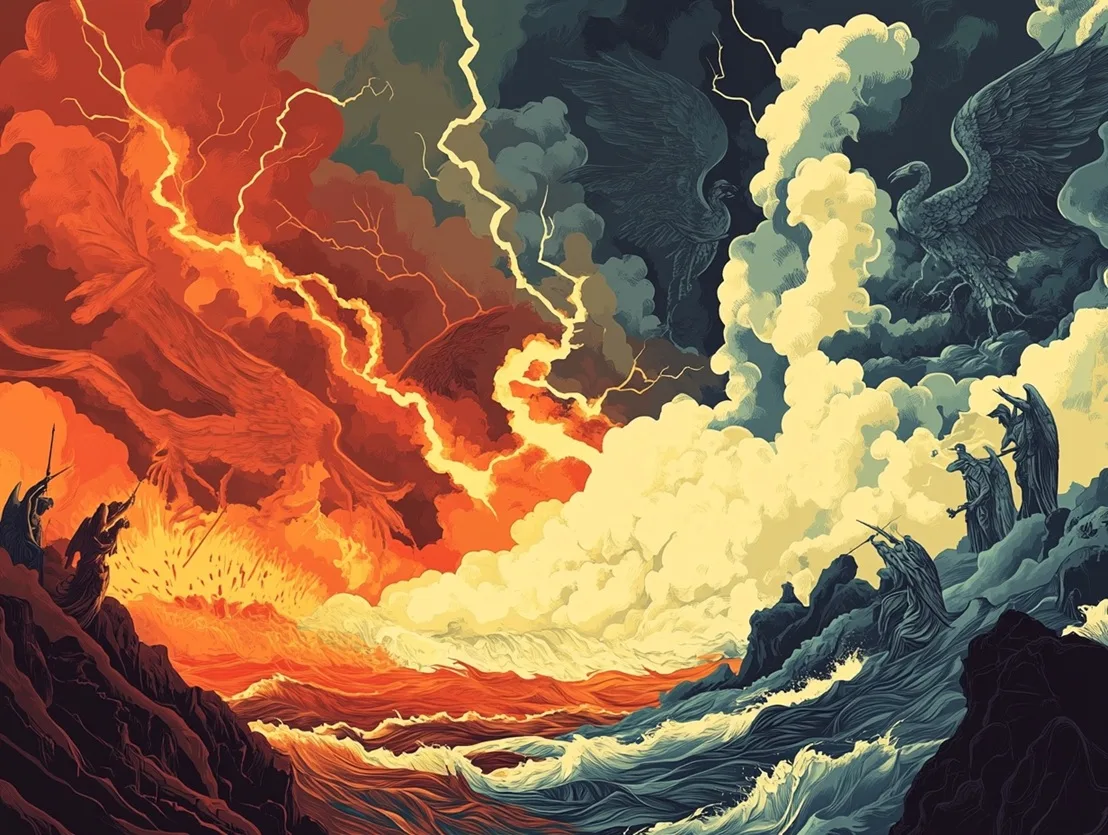
The seven bowls of wrath form Revelation 16’s final sequence of plagues before Babylon falls and the last battle begins. John presents sores, blood, heat, darkness, invasion, and cosmic collapse through the symbolic language of Jewish apocalypse. Although interpreters disagree about chronology and fulfillment, the chapter clearly confronts imperial violence, idolatry, and stubborn refusal to repent.
Where the Seven Bowls of Wrath Appear in Revelation
Revelation belongs to the Christian New Testament and therefore holds canonical status in most Christian traditions. John of Patmos addresses seven churches in Roman Asia, while visions carry him from earthly conflict into God’s heavenly court. Moreover, the book identifies itself as prophecy and apocalypse, genres that reveal hidden meaning through angels, beasts, numbers, and cosmic signs.
Many scholars place Revelation near 95 CE, during Domitian’s reign, although some argue for an earlier date. The Encyclopaedia Britannica overview of Revelation summarizes its authorship, setting, and disputed chronology. Therefore, readers should picture Greek-speaking Christian communities within Roman imperial culture, not a modern audience receiving a coded newspaper forecast.
The bowls follow the seals and trumpets, so John builds intensity through three groups of seven. First, seals unveil conquest, scarcity, death, martyrdom, and cosmic disturbance. Next, trumpets damage portions of creation; finally, bowls strike without those earlier fractional limits. This architecture also connects with the symbolism of the seven seals and the role of the seven trumpets.
Historical Context: Patmos, Rome, and Apocalyptic Culture
John writes from Patmos, an Aegean island near the western coast of Asia Minor. His churches lived among temples, trade associations, civic rituals, and public claims about Roman power. Consequently, Revelation’s beastly empire would have sounded politically charged, even when its visions reached beyond one emperor or generation.
Jewish apocalyptic literature already offered John a rich symbolic vocabulary. Daniel supplied beasts and kingdoms, while Exodus supplied plagues, deliverance, and a hardened ruler. Isaiah 51:17 pictured Jerusalem drinking a cup of wrath, and Ezekiel 22:31 described poured-out indignation. Thus, the bowls join ancient Near Eastern images of divine kingship with Second Temple hopes for judgment and restoration.
The book never names its author as the apostle John, although later tradition often made that identification. Instead, the text calls him John and places him among fellow servants who suffer for their witness. This distinction matters because historical context can clarify the vision without settling every question about identity, date, or literal fulfillment.
How the Seven Bowls of Wrath Unfold
Revelation 15 introduces seven angels carrying the last plagues, then fills seven golden bowls with divine wrath. Chapter 16 moves rapidly, and each angel pours one bowl onto a different realm of creation. The complete New International Version text of Revelation 16 displays the sequence across land, sea, fresh water, sun, the beast’s throne, the Euphrates, and finally the air.
- The first bowl brings painful sores upon people who bear the beast’s mark and worship its image.
- The second turns the sea into blood like a dead person’s blood, and every marine creature dies.
- The third turns rivers and springs into blood, while an angel declares the judgment just.
- The fourth lets the sun scorch people with fierce heat, yet they curse God instead of repenting.
- The fifth darkens the beast’s kingdom, whose subjects gnaw their tongues in agony and still refuse repentance.
- The sixth dries the Euphrates and gathers eastern kings toward Armageddon through deceptive spirits.
- The seventh produces a great earthquake, collapsing cities and bringing hailstones weighing a hundred pounds upon humanity.
The first bowl targets religious and political allegiance rather than humanity without distinction. Revelation links the foul and loathsome sores with the beast’s mark and image, making bodily affliction reflect spiritual corruption and idolatry. Revelation 16:2, in the New King James Version, describes the affliction:
“a foul and loathsome sore”
The second and third bowls transform both salt water and fresh water into blood. Accordingly, the judgment moves from the chaotic sea to rivers and springs that sustain ordinary life. Revelation 16:3, in the New King James Version, describes the sea:
“like the blood of a dead man,”
After the third bowl, the angel of the waters affirms divine righteousness rather than lamenting environmental loss. The logic answers persecution: those who shed the blood of saints and prophets now receive blood to drink. Revelation 16:5, in the New International Version, begins the declaration:
“You are just in these judgments,”
The fourth and fifth bowls shift the vision’s attention from water toward heat and darkness. Although the sun scorches people, suffering does not automatically produce repentance; instead, they curse God. Meanwhile, darkness covers the beast’s kingdom and publicly exposes the collapse of corrupt power. The scene recalls Egypt’s ninth plague in Exodus 10:21–23, yet John directs it against a new oppressive order.
The sixth bowl dries the Euphrates, historically a strategic frontier associated with threats from the east. Three unclean spirits then lure rulers toward the place called Armageddon, so deception drives the military gathering. For a fuller treatment of that scene, the battle of Armageddon explains the name and its place within Revelation’s conflict.
Finally, the seventh bowl enters the air, and a voice from the throne announces completion. Lightning, thunder, earthquake, collapsing cities, fleeing islands, vanished mountains, and heavy hail dismantle the present world order. Revelation 16:17, in the King James Version, gives the final proclamation:
“It is done.”
Exodus Echoes and Prophetic Bowls
The Egyptian plagues provide the clearest canonical comparison. Both narratives include sores, blood, darkness, and hail, while both portray rulers or peoples who harden themselves under judgment. However, Exodus concentrates on Pharaoh and Egypt, whereas Revelation expands the pattern across the beast’s international system.
John also reverses the Exodus pattern in provocative ways. Israel once escaped through divided waters, but the sixth bowl removes a river barrier for invading kings. Likewise, blood once signaled liberation from slavery, while Revelation’s blood-filled waters answer the killing of saints. Therefore, old deliverance imagery becomes a warning about every empire that repeats Pharaoh’s violence.
Prophetic cup imagery supplies another important background for John’s symbolic choices. Isaiah addresses Jerusalem as one who drank the cup of divine anger, while Jeremiah makes nations drink a wine cup of wrath. Ezekiel also pictures poured-out indignation against entrenched corruption. In contrast, John distributes wrath through seven temple bowls, joining priestly vessels, courtroom judgment, and cosmic plague within one vision.
Seals, Trumpets, and Bowls Compared
The three cycles overlap in imagery, yet each cycle changes the pressure and scale. Seals introduce forces already moving through history, including war, famine, death, and persecution. Trumpets then strike portions of land, sea, fresh water, heavenly lights, and human society. Finally, bowls revisit those domains with comprehensive language and no stated fraction.
| Cycle | Place in Revelation | Dominant effect | Literary emphasis |
|---|---|---|---|
| Seven seals | Revelation 6–8 | Conquest, scarcity, death, martyrdom, cosmic fear | The Lamb opens history and exposes its violence |
| Seven trumpets | Revelation 8–11 | Partial damage to creation and humanity | Warnings echo Exodus and call for repentance |
| Seven bowls | Revelation 15–16 | Final plagues across the beast’s world | Judgment reaches its climax before Babylon falls |
Nevertheless, readers should not assume that John offers a simple modern timeline. Repeated earthquakes, cosmic disturbances, and final-sounding scenes may indicate recapitulation, escalation, or both. Hermeneutics therefore matters: futurist, historicist, preterist, and idealist readings arrange these cycles differently, even when each recognizes deliberate parallels.
Angels also organize every cycle and link heaven’s commands with earthly consequences. They do not act as independent deities or chaotic spirits; instead, they serve within the vision’s courtly order. The essay on angels in the Book of Revelation provides wider context for their roles as messengers, worshipers, and agents.
Divine Justice, Mercy, and Refused Repentance
The bowls emphasize severe judgment, but the narrative presents that severity as an answer to persecution and systemic evil. Saints and prophets have shed blood, while the beast demands worship and marks economic allegiance. Consequently, the angel’s declaration frames the plagues as measured justice rather than arbitrary divine anger.
At the same time, the chapter creates a genuine tension between judgment and mercy. Earlier trumpet plagues leave much of creation untouched, which suggests warning and an opportunity for repentance. Bowls bring finality, yet Revelation twice notes that sufferers refuse to repent. The narrative therefore portrays moral resistance, not suffering alone, as the central human problem.
The seventh declaration sharply intensifies that sense of completion. Revelation does not end at chapter 16, however, because Babylon must fall and the beastly powers still face defeat. That proclamation affirms fulfillment within the bowl sequence, while later chapters unfold its consequences. Thus, finality functions literarily before the promised new creation arrives.
Canonical Revelation and Related Apocryphal Texts
Revelation is canonical Christian scripture, whereas several related apocalypses carry apocryphal or pseudepigraphal status. First Enoch, Fourth Ezra, and the Apocalypse of Peter likewise unveil judgment through guided visions and symbolic geography. However, Jewish and Christian communities received these works differently, so apocryphal does not mean historically worthless or uniformly rejected.
- First Enoch is Jewish pseudepigrapha that expands traditions about fallen watchers, heavenly journeys, judgment, and the righteous.
- Fourth Ezra, also called 2 Esdras in some Bibles, is a Jewish apocalypse preserved through Christian transmission.
- The Apocalypse of Peter is an apocryphal Christian work that describes postmortem rewards and punishments in vivid scenes.
- The Gnostic Apocalypse of Peter from Nag Hammadi is a different apocryphal work shaped by gnosis and polemic.
These comparisons reveal both shared conventions and striking differences. Other apocalypses often depend on a famous ancient seer, which makes them pseudepigraphal, but Revelation simply names John. Moreover, Revelation focuses on worship, empire, martyrdom, and renewed creation rather than offering only a catalog of individual punishments.
The Nag Hammadi writings also remind readers that early Christianity contained competing accounts of authority and revelation. Yet their Gnostic Apocalypse of Peter neither supplies the source for John’s bowls nor belongs to the New Testament canon. Comparison helps map ancient diversity, while careful classification prevents distinct manuscripts, communities, and theologies from collapsing into one category.
Armageddon, Babylon, and the Cosmic Conflict
The sixth bowl does not narrate the battle itself; instead, it gathers kings through demonic deception. Armageddon therefore functions as a charged destination before later visions portray the defeat of hostile powers. This delay links the bowls with Revelation’s cosmic battle, where earthly empire mirrors conflict at a larger symbolic level.
Babylon also appears during the seventh bowl, when God remembers the city and gives it the cup of wrath. John later depicts Babylon as a wealthy, violent power whose merchants and rulers benefit from exploitation. Consequently, the bowls target more than private wrongdoing; they expose political, economic, religious, and ecological consequences within an imperial system.
The catastrophic earthquake then divides the great city and topples the cities of nations. Islands flee, mountains disappear, and hail intensifies the Exodus echoes. Even so, the vision uses cosmic scale to express theological collapse, not merely to furnish disaster spectacle. Revelation insists that oppressive order cannot preserve itself forever.
What the Vision Can Mean Today
Modern readers often approach the bowls through fear, prediction, or arguments about literal chronology. A historically grounded reading adds another question: how did this vision challenge communities living beneath Rome’s claims? It offered warning and hope by declaring that imperial power remained temporary, accountable, and unable to defeat faithful witness.
For readers today, the same imagery can provoke reflection about allegiance and systemic harm. The beast’s mark joins worship with public and economic belonging, while the plagues reveal creation suffering under rebellion. However, responsible interpretation avoids assigning contemporary enemies a monstrous label whenever disagreement arises. Apocalyptic symbols invite moral scrutiny before they become weapons against others.
The bowls also resist easy optimism about suffering. People experience terrible consequences, yet they curse rather than change, so pain never guarantees insight or repentance. Meanwhile, the vision promises that evil will not prevail and that judgment clears the way for renewal. Revelation’s new beginnings develop that hopeful movement beyond destruction.
Frequently Asked Questions
Are the seven bowls literal future disasters?
Christian interpreters have long disagreed about that question. Futurist readings expect future events, while preterist, historicist, and idealist approaches connect the images with Rome, church history, or recurring patterns of evil.
Why do the bowls resemble the plagues of Egypt?
John uses canonical Exodus imagery to cast the beast’s world as another oppressive Egypt. Therefore, judgment also implies deliverance for people who resist idolatrous power.
Is Armageddon the sixth bowl’s actual battle?
No actual battle occurs in Revelation 16:12–16; instead, the passage describes preparation and gathering. Later conflict scenes show hostile forces falling before divine authority.
How do apocryphal apocalypses help interpret Revelation?
They illuminate shared literary genres, symbolic conventions, and ancient expectations. However, they remain distinct apocryphal or pseudepigraphal texts, while Revelation belongs to the Christian biblical canon.
Keep Thinking Beyond the Final Bowl
The seven bowls of wrath confront readers with justice, ecological devastation, imperial arrogance, and persistent refusal to repent. Yet chapter 16 does not leave ruin as Revelation’s final word. The visions move through Babylon’s fall and cosmic conflict toward judgment, healing, and a new creation where violent powers no longer dominate.
Curiosity should remain alongside conviction because Revelation rewards patient comparison more than sensational certainty. Its manuscripts, scriptural echoes, and disputed chronology invite historical study, while its symbols continue testing every age’s loyalties. Finally, the bowls ask whether power serves life or demands worship, a question that remains urgent without forcing one rigid timetable.
Check out the author’s book here: The Book of Revelation.



Leave a Reply