
The Apocalypse of Adam presents cosmic conflict through a dying father’s revelation to his son Seth. Rather than stage a simple war between equal gods, the text opposes an ignorant creator’s power to a higher, luminous knowledge. Moreover, its retelling of Genesis turns humanity’s first family into witnesses of lost glory and promised rescue; that reversal makes this apocryphal work both unsettling and rewarding.
The narrative asks whether evil begins with disobedience, ignorance, political power, or forgetfulness about humanity’s true origin. Consequently, its moral world differs sharply from familiar readings of Adam’s fall. The work still explores temptation, judgment, redemption, and divine intervention, yet it rearranges their relationships; its contradictions invite careful hermeneutics instead of an easy doctrinal verdict.
The Apocalypse of Adam in the Nag Hammadi Manuscripts
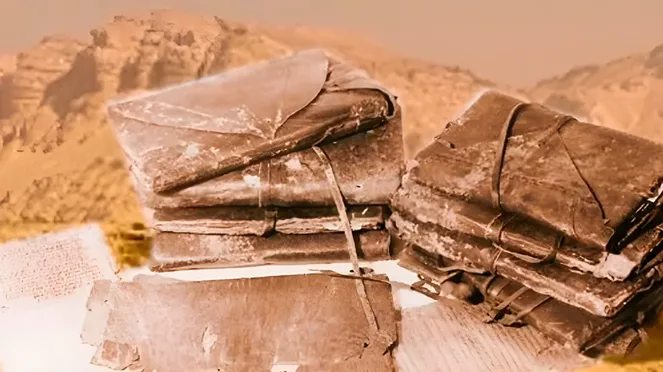
Modern readers know the work from Nag Hammadi Codex V, a fourth-century Coptic manuscript discovered in Egypt during the twentieth century. However, scholars generally think a lost Greek composition stood behind that surviving Coptic copy. The Gnostic Society Library translation makes the complete text accessible online; because no earlier manuscript survives, proposals about its original date and setting remain debated.
Scholars often place its composition within the early centuries of the Common Era, amid Jewish, Hellenistic, and developing Christian cultures. Meanwhile, some interpreters emphasize Jewish apocalyptic features, whereas others see Christian or Gnostic revision. The text never identifies its author, despite speaking through the biblical Adam; therefore, scholars classify it as pseudepigraphal as well as apocryphal.
- The surviving witness uses Coptic and belongs to Nag Hammadi Codex V.
- A lost Greek form probably preceded the surviving manuscript.
- The unnamed author writes under Adam’s ancient authority.
- Competing Jewish, Christian, Hellenistic, and Gnostic contexts shape modern interpretation.
Adam, Eve, and Seth Retell the Fall
The story opens when Adam, at seven hundred years old, teaches Seth about knowledge once shared with Eve. According to Adam, they once possessed a glory greater than the creator’s powers. Then an angry ruler divided the couple and dimmed their knowledge; thus, the fall becomes a loss imposed by a jealous cosmic authority, not merely punishment for human rebellion.
Genesis remains canonical scripture in Jewish and Christian traditions, whereas this apocalypse remains noncanonical and pseudepigraphal. In Genesis, the serpent promises knowledge of good and evil before Adam and Eve eat. However, their rival interpretations give knowledge sharply different moral meanings within their respective worlds. Genesis 3:5, in the King James Version, reads:
For God doth know that in the day ye eat thereof, then your eyes shall be opened, and ye shall be as gods, knowing good and evil.
By contrast, Adam’s apocalypse treats saving knowledge as an earlier inheritance that oppressive powers suppress; this reversal does not simply praise every kind of learning. Instead, it distinguishes awakened knowledge, or gnosis, from the creator’s limited perception and coercive rule. Therefore, knowledge carries ethical responsibility because it reveals whose authority deserves trust.
The Apocalypse of Adam and the Cosmic Battle
Good and evil appear less like matching armies than rival accounts of reality, human identity, and legitimate power. The lesser creator governs through fear, separation, and catastrophe, while the higher realm communicates light and remembrance. Consequently, humanity stands within the conflict and must interpret competing claims; every choice matters because false stories about human origins can sustain corrupt authority.
Adam also predicts destruction by flood and fire, familiar instruments of judgment in ancient apocalyptic literature. However, the rulers cannot extinguish the protected lineage that carries knowledge forward; Noah enters the story, yet the narrative recasts his covenant from an outsider’s viewpoint. That choice links primeval history with resistance against powers that claim total control.
Compare this cosmic geography with The Book of Enoch Explained: Watchers, Giants and the Symbolism of the Heavenly Realms. Enochic writings also expand canonical Genesis, although their Watchers and giants follow a different mythology. Likewise, The Legacy of Enoch in Jewish and Christian Traditions traces contrasting interpretations of one ancient figure. Together, these comparisons clarify diversity within Second Temple and later apocalyptic thought.
The Illuminator and Thirteen Kingdoms
At the center of Adam’s prophecy, a luminous savior figure descends and confronts hostile powers. The text calls this figure the Illuminator, but it never supplies a straightforward biography or universally accepted identity. Moreover, people from thirteen kingdoms offer competing explanations of the figure’s origin; their stories invoke prophets, rulers, natural marvels, and extraordinary births without reaching the final truth.
This sequence turns religious explanation into part of the drama; each kingdom recognizes something remarkable, yet each account remains partial or mistaken. Finally, a generation without a king receives knowledge and identifies the Illuminator differently. The narrative therefore associates truthful vision with freedom from earthly sovereignty, inherited myth, and political domination.
The thirteen accounts also resist a tidy equation between darkness and ordinary human weakness. Instead, institutions manufacture error when they claim complete knowledge of the savior’s source; readers encounter a demanding principle: impressive traditions may still conceal rather than reveal. Thus, the text makes discernment central to its interplay of good and evil.
Symbols of Light, Water, and Knowledge
Light represents the glory Adam and Eve lose, the origin of the Illuminator, and the knowledge preserved among their descendants. Water carries a more ambiguous charge because the flood destroys while also marking survival and covenant. Meanwhile, fire signals another assault by hostile powers; these symbols connect the narrative with ancient Near Eastern catastrophe traditions and later apocalyptic expectations.
The baptismal language near the ending has generated especially sharp debate; some scholars read it as criticism of ordinary water baptism, whereas others detect polemic against a rival rite or community. Therefore, the work touches ritual without presenting a manual of sacred ceremonies. It values hidden teaching, but the surviving pages do not prescribe prayer, fasting, gestures, or communal worship.
Broader ancient communities certainly used prayer, fasting, worship, blessings, and protective symbols to seek divine favor; however, attributing every such practice directly to this apocalypse would exceed the manuscript’s evidence. For comparison, The Testament of Solomon develops demons, names, and control practices much more explicitly. That apocryphal work offers a different bridge between cosmic belief and ritual action.
Canonical Revelation and Apocryphal Visions
Canonical Revelation presents Christ’s victory, final judgment, renewed creation, and the New Jerusalem within a Christian prophetic framework. Adam’s apocalypse, by contrast, retells primordial history through Seth and emphasizes liberation from an inferior ruler. Both works expose violent empire through visionary language, but they organize divine authority differently. Therefore, resemblance in imagery does not erase major theological differences.
The Apocalypse of Peter remains apocryphal, although some early Christians placed it near the canon’s edge. It concentrates on postmortem rewards and punishments, whereas Adam’s revelation concentrates on origins, floods, rulers, and gnosis. Meanwhile, The Battle of Armageddon examines canonical Revelation’s climactic warfare. Together, these texts show that “apocalypse” names revelation, not merely disaster.
Apocalyptic literature frequently answers social turbulence by revealing a reality beyond present oppression. Likewise, this work promises that violent powers cannot destroy the people of knowledge. Yet its hope does not depend primarily on military triumph, because recovered identity defeats the rulers’ central weapon: ignorance about humanity’s higher source.
Good, Evil, and Moral Responsibility
The original conflict still supports ethical reflection, although the text offers no modern self-help program. First, it warns that power can disguise limitation as absolute truth. Second, it connects moral freedom with memory, humility, and responsible knowledge. Finally, it suggests that communities preserve hope when rulers define them falsely.
Such claims complicate any simple dualism between good people and evil outsiders. The narrative’s favored group possesses knowledge, but readers must still ask how certainty might become another form of domination. Moreover, hidden teaching can protect vulnerable communities or shield leaders from scrutiny. A curious, non-dogmatic reading holds both possibilities together.
Wisdom in this setting requires more than gathering secret information. Rather, insight should expose cruelty, deepen accountability, and resist corruption within both leaders and communities. The Wisdom of Solomon: Ancient Insights for Modern Times offers a useful contrast. That canonical book for Catholic and Orthodox Christians, but apocryphal for most Protestants, joins wisdom with justice through another theological framework.
Historical Culture and Gnostic Interpretation
The manuscript emerged from a culturally mixed Egypt where Greek intellectual traditions, Egyptian religion, Judaism, and Christianity had interacted for centuries. Nevertheless, a manuscript’s Egyptian location does not prove the original author wrote there. The Encyclopaedia Britannica overview of Gnosticism outlines the category’s history and scholarly problems. Modern researchers therefore use “Gnostic” carefully rather than imagining one unified church.
The work fits Gnostic patterns through its inferior creator, higher divine realm, luminous humanity, and saving knowledge. However, those features do not settle every question about community or date. Its biblical language also reveals sustained engagement with Jewish scripture. Consequently, scholars continue asking whether an early Jewish apocalypse received Christian or Gnostic additions, or whether one author blended these materials.
Harvard Divinity School and other academic institutions study Nag Hammadi writings within the broader history of early Christianity. Meanwhile, manuscript analysis distinguishes the date of a surviving codex from the date of its underlying composition. Linguistic analysis also traces how the Coptic translation may preserve Greek concepts. Even so, certainty remains elusive because researchers possess only the later witness.
Why the Text Matters Today
Modern readers need not accept the work’s cosmology to recognize its questions about propaganda, authority, and moral choice. For example, institutions still shape behavior by controlling stories about origin, worth, and destiny. The apocalypse asks who benefits from a supposedly complete explanation. Therefore, its ancient myth can sharpen contemporary attention without becoming a direct blueprint for politics.
Personal reflection also works best when it follows the text’s complexity. Journaling, meditation, prayer, or quiet study may help readers examine how power affects their decisions. Likewise, discussion groups can compare interpretations and test confident claims against the manuscript. These practices belong to modern readers, however, rather than to explicit instructions from Adam’s revelation.
The broader category also matters because canonical boundaries developed through historical communities and remain different among traditions. Exploring the Apocrypha: Forgotten Scriptures that Shaped Christian Thought surveys texts outside some or all biblical canons. Accordingly, “apocryphal” describes canonical status, not automatic falsehood or spiritual danger. Careful reading asks what a work claimed, who transmitted it, and why communities valued or rejected it.
Frequently Asked Questions
Is The Apocalypse of Adam part of the Bible?
No major Jewish or Christian tradition includes it in the biblical canon. Instead, scholars call it an apocryphal and pseudepigraphal apocalypse because an unknown author attributes the revelation to Adam.
Who wrote the work, and when?
The author remains unknown, while scholars propose dates within the early centuries of the Common Era. However, the only surviving copy comes from a fourth-century Coptic codex found near Nag Hammadi.
Does the text describe a simple battle between God and Satan?
No, its conflict concerns an ignorant creator, hostile powers, a higher realm, and an Illuminator. Therefore, its dualism differs from many familiar Christian accounts of God, Satan, sin, and redemption.
Why do scholars call it Gnostic?
The narrative emphasizes saving knowledge, a transcendent divine source, and humanity’s forgotten luminous identity. Nevertheless, scholars debate its precise religious setting because it also draws deeply from Jewish scripture and apocalyptic traditions.
Keep Thinking About the Lost Glory
The Apocalypse of Adam endures because it makes interpretation part of its cosmic struggle. Its rulers control through ignorance, while liberation begins when people remember a glory that power cannot grant. Yet the work also leaves difficult questions about elitism, ritual, and competing revelations. Those tensions reward continued study more than a flattened lesson about light defeating darkness.
Finally, its imaginative revision of Genesis shows how ancient readers argued with inherited scripture while still treating it as authoritative. The text can prompt humility about every confident reconstruction, including modern ones. Its challenge remains open: examine how stories authorize power, then ask whether knowledge produces responsibility, freedom, and hope.
Check out the author’s book here: The Apocrypha.

Leave a Reply