
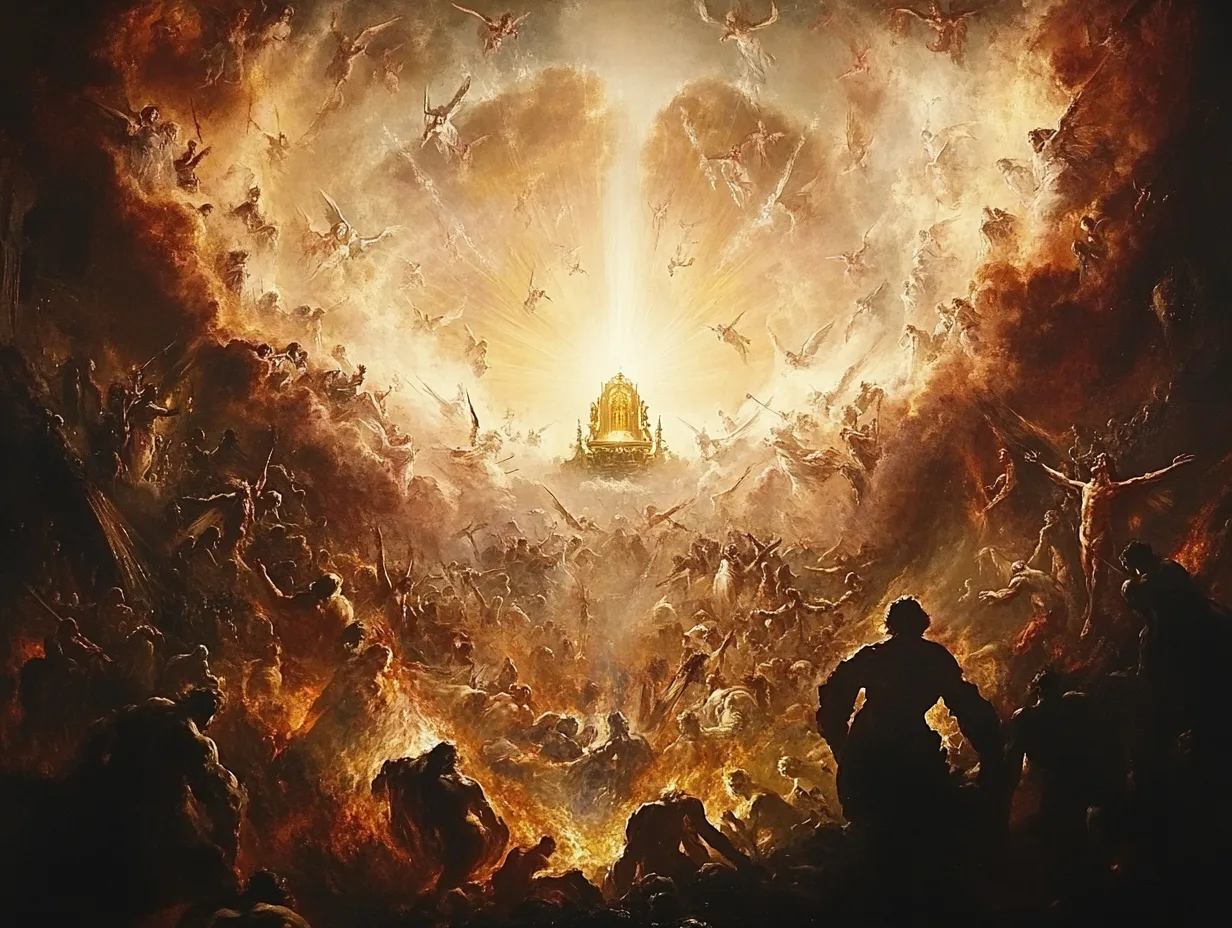
The Apocalypse of Peter stood close to the boundaries of the Christian canon, yet most churches eventually left it outside. Its tour of heaven and hell turns moral choices into scenes of reward, pain, justice, and possible mercy. Although the images can repel modern readers, they also preserve second-century arguments about conduct and divine judgment; therefore, this apocryphal work offers historical evidence, not a secret appendix to canonical scripture.
Dating the Apocalypse of Peter in Early Christianity
An anonymous Christian author wrote under Peter’s name, a common ancient practice now called pseudepigraphy. Scholars place the work in the second century, although some estimates reach the early third century. More narrowly, Early Christian Writings dates it between 100 and 150, during Christianity’s expansion across the Roman world. The actual writer, community, and city remain unknown, so claims about exact origins require caution.
The Apocalypse of Peter speaks from a culture where Jewish apocalyptic traditions met Hellenistic ideas about the afterlife, while its author organized Christian teachings through a visionary journey. Meanwhile, Greco-Roman images of fitting punishment helped make each penalty resemble the corresponding offense. Readers can therefore see cultural exchange without reducing the book to any single borrowed system.
The work belongs among Christian apocrypha and New Testament pseudepigrapha, not among Jewish Second Temple canonical writings. However, it continues Jewish apocalyptic habits found in Daniel, 1 Enoch, Isaiah, and other visionary traditions. A guide to forgotten scriptures that shaped Christian thought helps locate such books without granting them identical status. Labels matter because “apocryphal,” “canonical,” and “gnostic” describe different histories, not interchangeable shelves.
Manuscripts, Fragments, and a Disputed Canon
No complete Greek scroll or codex preserves the work, so editors reconstruct its contours from the Greek Akhmim fragment and a fuller Ethiopic version. In addition, quotations by early Christian writers reveal passages absent from the main surviving copies. Consequently, every modern edition involves textual criticism and judgment about manuscript relationships across languages, regions, and centuries of transmission.
The Greek fragment came from a manuscript discovered in a nineteenth-century Akhmim tomb in Upper Egypt. However, the manuscript dates centuries later than the original and shares its codex with other Petrine material. A small Bodleian Greek leaf adds lines, while Ethiopic transmission expands the narrative substantially. M. R. James’s translation and notes display these witnesses and their differences.
Ancient reception gives the phrase “nearly entered the canon” weight, because the Muratorian Fragment accepts John’s and Peter’s apocalypses while reporting objections to public reading. Clement of Alexandria treated the work with unusual respect, and Sozomen later reported annual reading in some Palestinian churches. Nevertheless, broad ecclesial consensus eventually favored canonical Revelation and excluded this Petrine apocalypse from the New Testament.
Several milestones clarify that uneven journey:
- Around 100–150, an unknown Christian author likely composed the pseudepigraphal apocalypse within the Roman cultural world.
- Later second-century canon discussion received Peter’s vision, although some Christians resisted its public use in church.
- Early theologians quoted or discussed the work, thereby preserving material outside the surviving Greek fragment.
- Nineteenth-century manuscript discoveries transformed modern study by restoring substantial Greek evidence from Akhmim.
- Today, historians classify the text as apocryphal, while canonical Revelation remains inside the New Testament.
What the Vision Actually Says
The narrative begins with Jesus and his disciples on the Mount of Olives, where they ask about his coming. Jesus warns against deceivers and describes resurrection, cosmic dissolution, judgment, punishment, and reward. Afterward, Peter witnesses contrasting places that make invisible moral claims visible through bodies and landscapes. The surviving versions arrange some scenes differently, reminding interpreters that no single manuscript settles every sequence.
In the Akhmim fragment, the M. R. James translation reads:
And then shall God come unto my faithful ones that hunger and thirst and are afflicted and prove their souls in this life, and shall judge the sons of iniquity.
That sentence joins suffering, endurance, and judgment before the detailed tour unfolds. Although the vision addresses the end of the world, its ethical pressure falls upon present behavior. The author wants hearers to identify injustice now and expect an answer beyond current institutions. Therefore, apocalyptic time functions as moral interpretation, not simply a timetable for future disasters.
The punishments follow a principle often called measure-for-measure retribution, since bodily torments mirror particular offenses. Blasphemers, false witnesses, persecutors, idolaters, the sexually exploitative, and those who harmed children receive distinct fates. Moreover, the specificity converts abstract wrongdoing into dramatic physical images that an audience could remember. Such scenes can instruct, frighten, or satisfy anger, and responsible hermeneutics should acknowledge all three effects.
Heaven provides the counterimage through fragrant land, brilliant clothing, beautiful bodies, flowers, light, and communal joy. Whereas hell isolates offenders within their harms, paradise gathers the righteous around divine presence and shared abundance. The contrast makes ethics tangible, yet it also risks turning salvation into a simple exchange of conduct for comfort. Ancient readers probably heard both promise and warning whenever communities recited these scenes aloud.
How the Apocalypse of Peter Makes Punishment Fit Sin
The book’s infernal imagery does more than assemble horrors, because each punishment interprets an earthly relationship. People suffer through the organs or actions they misused, and victims sometimes confront those who injured them. For example, corrupt speech brings torment associated with the mouth, while sexual wrongdoing receives explicitly embodied penalties. The method creates a moral map where sin contains the symbolic shape of its own judgment.
Several recurring concerns organize that map:
- False teachers corrupt communal trust, so the vision places doctrinal deception under severe judgment.
- Persecutors and betrayers face divine reversal after using social power against vulnerable righteous people.
- Idolaters suffer beside their manufactured images, exposing the author’s rejection of competing worship.
- Sexual offenders encounter tailored bodily penalties that dramatize exploitation, desire, and violated boundaries.
- Parents who destroy children confront those lives again, making concealed violence publicly answerable.
However, correspondence does not make every punishment morally easy for contemporary readers to accept. Endless pain can seem disproportionate, especially when the surviving recensions disagree about mercy and duration. Moreover, depictions involving women reflect ancient assumptions about gender, sexuality, pregnancy, and communal control. Historical reading should neither sanitize these features nor pretend that description automatically requires modern assent.
That double function resembles prophecy in apocryphal texts, where future claims often address present crises. Apocalyptic language uncovers moral meaning behind appearances, which explains revelation as disclosure. Thus, heaven and hell become interpretive lenses upon the audience’s own community. The question concerns not only what comes later, but also what present conduct already reveals.
Paradise and Mercy in the Apocalypse of Peter
The vision gives less space to paradise than punishment, yet its positive scenes remain essential to the argument. Radiant inhabitants, fragrant plants, flowers, and harmonious fellowship represent restored creation rather than bodiless escape. In contrast, the damned endure disordered environments that extend the damage connected with their actions. Hope and warning therefore depend upon one another throughout the apocalypse’s moral architecture.
Some textual traditions preserve a striking possibility that the blessed may intercede for people undergoing punishment. The Ethiopic material and the Sibylline tradition complicate any simple claim about endless, irreversible torment. However, manuscript variation prevents interpreters from treating mercy as an uncontested ending of the original work. This uncertainty matters because a different final movement can reshape the meaning of every preceding punishment.
The merciful strand exposes a conflict within early Christian eschatology rather than resolving it. Divine justice demands consequences, whereas divine compassion may resist suffering without limit. Similarly, the interplay of good and evil in the Apocalypse of Adam presents revelation through another apocryphal framework. Reading across texts shows communities testing competing accounts of knowledge, evil, freedom, and rescue.
Gnosis does not provide the central solution here, and scholars should not call every noncanonical apocalypse gnostic. Indeed, a distinct Coptic Petrine apocalypse from Nag Hammadi advances different concerns. The Greek and Ethiopic Apocalypse of Peter emphasizes resurrection, judgment, conduct, and reward within early Christian preaching. Precise titles therefore prevent two Petrine pseudepigrapha from collapsing into one imagined document.
Canonical Revelation and Related Apocrypha
Canonical Revelation and the Apocalypse of Peter share angels, fire, cosmic disruption, judgment, vindication, and transformed creation. However, Revelation builds its drama around seals, trumpets, beasts, Babylon, martyrs, and the victorious Lamb. Peter’s vision instead lingers over a guided tour of individualized rewards and penalties. Thus, shared apocalyptic vocabulary produces markedly different narrative designs and pastoral effects.
The central Lamb in Revelation anchors hope in sacrificial victory and worship. By contrast, Peter’s apocalypse emphasizes Jesus as revealer and judge while cataloging destinations of human conduct. Revelation addresses seven named churches, whereas the pseudepigraphal vision presents instruction through Peter’s authority. Both resist injustice, but they stage resistance through different symbols and literary structures.
Other apocryphal and pseudepigraphal texts widen the comparison:
- 2 Esdras joins lament, cosmic renewal, and divine justice within a Jewish apocalypse transmitted by Christians.
- The Shepherd of Hermas uses visions and mandates to press Christian communities toward repentance and moral reform.
- The Gospel of Peter narrates passion and resurrection events rather than providing another tour of final punishment.
- The Apocalypse of Paul later develops a more extensive Christian journey through destinations beyond death.
- The Apocalypse of Elijah combines Jewish and Christian materials around deception, conflict, judgment, and deliverance.
Canonical status varies across that list, so comparison should not imply one uniform collection of “lost Bible books.” Although broader biblical traditions sometimes include 2 Esdras, the New Testament excludes all five named works. Meanwhile, each document carries its own manuscript history, genre, date, and reception. The eschatology of 2 Esdras shows how grief can shape an apocalypse differently.
Jewish Apocalyptic and Hellenistic Backgrounds
Jewish apocalyptic literature supplies essential patterns: mediated revelation, heavenly agents, resurrection, judgment, symbolic geography, and cosmic renewal. Isaiah, Ezekiel, Daniel, and later Second Temple writings offered language for divine intervention beyond ordinary political history. Therefore, Peter’s Christian vision participates in a long interpretive conversation rather than inventing afterlife judgment from nothing. Its author redirects inherited motifs around Jesus and apostolic witness.
Hellenistic and Roman culture also supplied images that audiences could recognize, including fiery rivers and blessed landscapes. In particular, measure-for-measure punishment appears across ancient moral storytelling, legal imagination, and descriptions of the underworld. Yet identifying parallels does not establish direct borrowing from one lost source. Cultural environments work through shared language and expectations, often without leaving a traceable line of dependence.
Influence on Later Visions of Heaven and Hell
The work helped establish a durable literary pattern: a privileged traveler sees postmortem realms and reports their moral order. Later Christian apocalypses expanded that tour, adding guardians, bridges, rivers, lists of sinners, and increasingly elaborate locations. Although direct influence can prove difficult, the Apocalypse of Paul clearly belongs to this developing visionary stream. Medieval journeys eventually made infernal geography even more systematic and memorable.
Dante’s Inferno offers a famous later example of punishments that correspond symbolically to sins. However, a long tradition separates Dante from the Apocalypse of Peter, so simple dependence overstates the evidence. The comparison works best through a shared imaginative method, since both turn moral analysis into landscape and bodily experience. Likewise, medieval artists drew upon scripture, preaching, legends, and several apocrypha when creating heaven and hell.
Why This Lost Apocalypse Matters Now
Modern readers gain most when they approach the book as historical evidence and morally provocative literature. It reveals that early Christian eschatology contained arguments, alternatives, and unstable textual endings rather than one seamless system. Moreover, its canon history shows respected communities disagreeing about which apostolic voices deserved public authority. Those disagreements make the formation of scripture more concrete without making it arbitrary.
Its uncertain ending creates another contemporary challenge around justice, mercy, and the possibility of restoration. If righteous intercession changes the damned person’s fate, communal compassion reaches beyond death and settled desert. If that passage entered later, however, its addition still records readers resisting an unqualified vision of endless torment. Either way, transmission itself becomes part of the history of Christian moral imagination.
Frequently Asked Questions
Is the Apocalypse of Peter part of the Bible?
Most Christian traditions exclude the Apocalypse of Peter from the New Testament canon, and scholars classify it as apocryphal and pseudepigraphal.
Who actually wrote this Petrine apocalypse?
No surviving evidence identifies the author, although a second-century Christian used Peter’s name to frame the revelation with apostolic authority.
Why did ancient Christians debate its canonical status?
Some communities valued the Apocalypse of Peter, but objections about public reading, authorship, reception, and content ultimately weakened its canonical position.
Does the work teach eternal punishment or eventual mercy?
Its punishments often sound everlasting, yet some witnesses preserve intercession and rescue; therefore, the manuscript tradition supports continued debate.
Keep Thinking About the Apocalypse of Peter
This apocalypse survives through fragments, translations, citations, disputed boundaries, and communities that did not always agree. Its heaven promises restoration, while its hell converts moral injuries into fearsome and sometimes troubling spectacles. Finally, its variant mercy tradition asks whether justice reaches completion through punishment, rescue, or some unresolved combination. The text still matters because it makes those choices impossible to treat as merely abstract.
The Apocalypse of Peter never secured a stable place in the New Testament, but exclusion did not erase its influence. Instead, its manuscripts preserve an unfinished early Christian argument about bodies, conduct, suffering, judgment, and hope. Readers can keep asking whose pain the vision recognizes, whose behavior it controls, and which ending best fits its God. Such questions keep apocalyptic literature historically grounded while allowing its contradictions to remain visible.
Check out the author’s book here: The Apocrypha.

Leave a Reply