
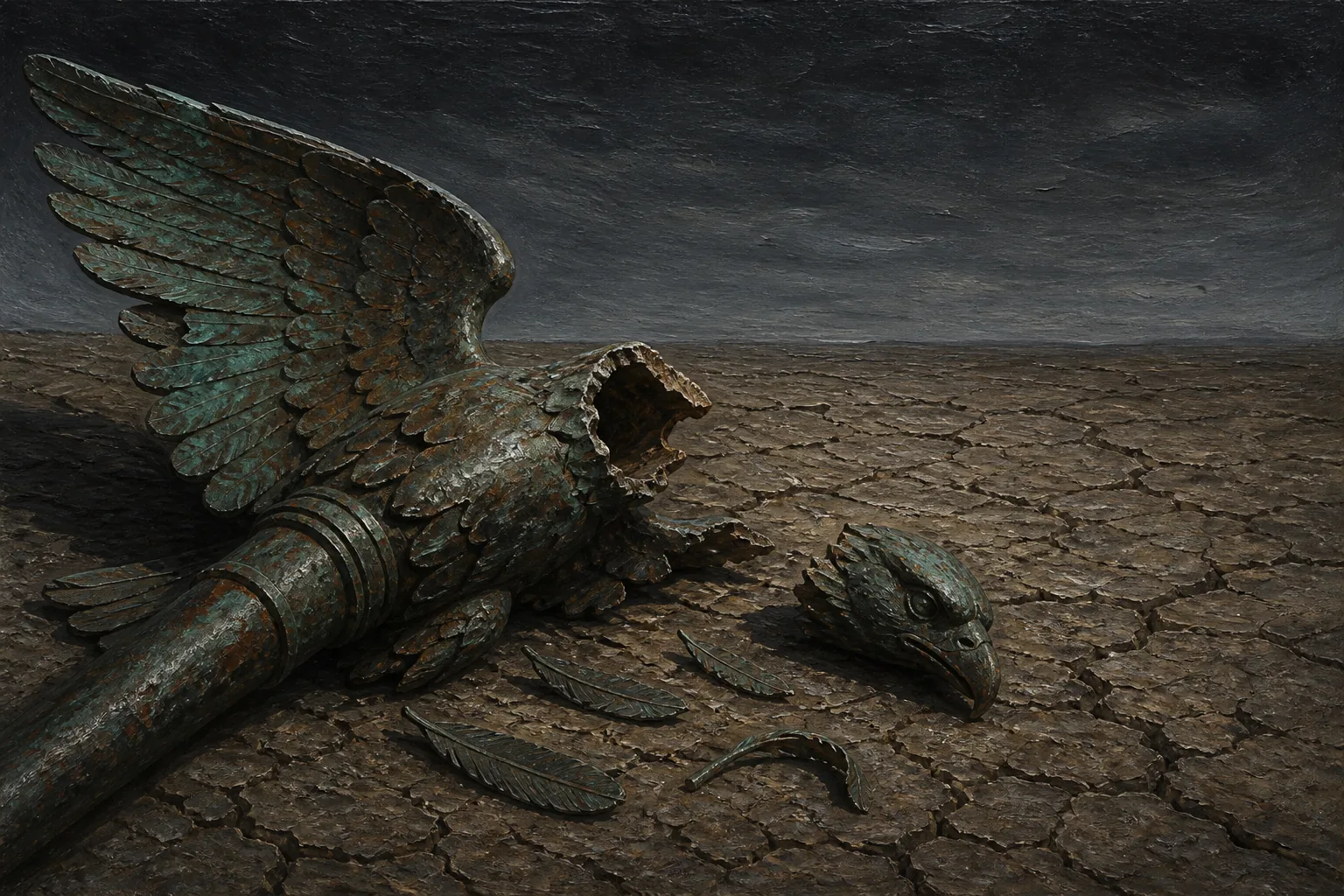
2 Esdras After the Temple’s Fall
The eschatology of 2 Esdras begins with grief rather than a timetable for calculating the world’s final day. Ezra questions divine justice because Rome prospers after crushing Jerusalem, while faithful people carry the cost of imperial violence. Consequently, the book turns catastrophe into a searching argument about judgment, resurrection, Israel’s restoration, and renewed creation.
Readers often encounter this work among the Apocrypha, although communities organize and number its books differently. The central Jewish apocalypse usually carries the scholarly name 4 Ezra, while many English Bibles place it inside 2 Esdras. Therefore, its layered title already signals a complex history of composition, transmission, translation, and religious reception.
Historical Context, Authorship, and Manuscripts
An anonymous Jewish author wrote the central apocalypse around the end of the first century CE. Most scholars connect its anguish with Rome’s destruction of the Second Temple in 70 CE. Indeed, the author speaks through Ezra, a scriptural figure from an earlier disaster, to interpret a newer national trauma.
This choice makes the work pseudepigraphal, since the historical Ezra did not compose the late first-century apocalypse. Its author probably worked in a Jewish culture shaped by Scripture, Second Temple interpretation, and Roman imperial power. However, scholars debate whether Palestine or another Jewish center supplied the book’s precise place of composition.
The original author probably wrote 4 Ezra in a Semitic language, perhaps Hebrew, although no original scroll survives. A Greek translation also disappeared, yet Latin, Syriac, Ethiopic, Arabic, Armenian, and Georgian witnesses preserve its descendants. For orientation, the overview of 2 Esdras summarizes its names, versions, and complicated canonical history.
Later Christian writers added chapters 1–2 before the Jewish core and chapters 15–16 after it. Thus, the familiar sixteen-chapter form combines three literary units rather than one composition from a single author. The following chronology clarifies the principal layers without pretending that every manuscript tradition uses identical numbering:
- Around 70–100 CE: a Jewish author composes the apocalypse now called 4 Ezra, corresponding to chapters 3–14.
- During the second century CE: Christian authors likely add the opening work often called 5 Ezra.
- During the third century CE: another Christian composition, often called 6 Ezra, supplies the closing chapters.
- Through late antiquity and the Middle Ages: translators preserve the work across several manuscript languages.
Canonical status also changes across communities, so one label cannot describe every religious setting. Most Jewish and Protestant canons treat the work as apocryphal or pseudepigraphal, while the Latin Vulgate tradition placed it in an appendix. Meanwhile, the Ethiopian Orthodox Tewahedo tradition receives related Ezra material within its broader canon, using its own forms and numbering.
How the Seven Visions Shape 2 Esdras
The book’s central portion arranges seven revelations across three dialogues, three symbolic visions, and Ezra’s final commission. Earlier summaries sometimes assign resurrection or end-time signs to separate numbered visions, but those themes actually cross several units. Accordingly, literary structure matters because Ezra’s emotional change carries the argument as strongly as any isolated prediction.
| Vision | Main image or encounter | Central eschatological concern |
|---|---|---|
| First | Ezra debates the angel Uriel | Israel’s suffering and divine justice |
| Second | Ezra continues questioning Uriel | Human sin, judgment, and the coming age |
| Third | Uriel explains signs and destinies | Death, resurrection, Messiah, and final judgment |
| Fourth | A mourning woman becomes Zion | Jerusalem’s grief and future restoration |
| Fifth | A great eagle confronts a lion | Imperial oppression and messianic judgment |
| Sixth | A man rises from the sea | Deliverance, conflict, and a peaceful multitude |
| Seventh | Ezra restores the sacred books | Revelation, memory, and wisdom after catastrophe |
The first three visions stage an argument between Ezra and Uriel rather than a calm doctrinal lecture. Ezra asks why God permitted Babylon, and implicitly Rome, to dominate people no less sinful than their conquerors. Yet Uriel repeatedly exposes the limits of human understanding while promising that the present age will not last forever.
Ezra does not surrender his moral protest quickly, which gives these dialogues their unusual spiritual force. He challenges inherited explanations because collective suffering seems incompatible with divine justice and Israel’s election. Therefore, apocalyptic revelation functions here as a form of hermeneutics: it rereads history when familiar answers have failed.
The book contrasts the present age with the age to come, a distinction common within Jewish apocalyptic thought. Human corruption fills the first age, whereas judgment and lasting justice govern the second. One compact statement in chapter 8, quoted here from the King James translation, expresses that division:
“The most High hath made this world for many, but the world to come for few.”
That sentence does not reject creation itself; instead, it distinguishes corrupt history from God’s promised order. The author therefore joins warning with consolation, since moral choices possess consequences beyond visible political success. Readers may consult the public-domain King James text of 2 Esdras for the wider textual setting.
Judgment, Souls, Resurrection, and the Coming Age
The third dialogue offers the book’s fullest account of death, intermediate destinies, resurrection, and judgment. Righteous souls anticipate peace, while wicked souls confront anguish as they recognize the choices that condemned them. Thus, the text grounds its dualism in conduct and accountability, rather than in two equal cosmic gods.
Resurrection completes that moral logic because death cannot permanently conceal either faithful endurance or destructive action. The earth returns those who sleep within it, and divine judgment reveals each person’s final destiny. Moreover, the author imagines eternal life for the righteous and punishment for the wicked after decisive judgment.
End-time signs include social upheaval, fear, disorder, and disruptions within nature before the transition arrives. Such images do not provide a modern calendar, although interpreters have often treated them as coded forecasts. Instead, they portray creation straining under injustice as one age gives way to another.
The Messiah appears within this sequence, reigns for a limited period, and then dies with humanity. After a primordial silence, resurrection and final judgment follow, creating a difficult sequence for later Christian interpreters. Consequently, the text preserves expectations that overlap with Christianity without simply reproducing Christian doctrine.
Zion, Empire, and Messianic Deliverance
The fourth vision shifts from debate to symbolic encounter when Ezra meets a woman mourning her son. Ezra initially counsels her, but her grief soon reveals the deeper sorrow of desolated Zion. Then, the woman transforms into a magnificent city, and personal lament opens onto Jerusalem’s promised restoration.
This vision does not erase trauma through easy optimism; rather, it honors mourning before unveiling hope. Zion’s transformation makes communal memory essential to renewal, since restored glory retains the history of loss. A related Christian image appears in the New Jerusalem in Revelation, though each text frames its city differently.
Next, Ezra sees a monstrous eagle whose wings and three heads struggle for control. The author adapts the canonical Book of Daniel, where beasts symbolize violent kingdoms, and directs that symbolism toward Rome. However, a lion representing the Messiah rebukes the eagle and announces the empire’s approaching judgment.
The eagle vision turns imperial succession into apocalyptic critique, yet its details resist one universally accepted reconstruction. Scholars commonly connect the heads and wings with Roman rulers, although proposed identifications vary. Therefore, the vision matters beyond a single chart because it denies that oppressive sovereignty deserves ultimate allegiance.
The sixth vision presents a human figure rising from the sea while hostile multitudes assemble against him. He destroys his enemies without ordinary weapons and gathers a peaceful multitude associated with Israel’s tribes. Similarly, Daniel’s canonical “one like a son of man” stands behind the imagery, while later readers heard messianic and Christian meanings.
The text thus presents restoration through several complementary images: a city, a lion, and a sea-borne man. Each symbol answers a different dimension of disaster, including ruined place, tyrannical rule, and scattered people. Meanwhile, Book of Enoch Prophecies offer another Jewish apocalyptic grammar for judgment and deliverance.
Ezra’s Final Commission and the Fate of Revelation
The seventh vision turns from future events toward the preservation of sacred memory after communal collapse. Ezra gathers five scribes and dictates ninety-four books during forty days, according to the narrative. Afterward, the community receives twenty-four books publicly, while seventy writings remain available only to the wise.
Those numbers connect apocalypse with scribal culture, not merely with spectacular visions or cosmic disasters. Public Scripture sustains the whole community, whereas reserved books promise deeper wisdom to prepared interpreters. Although the passage invites speculation about secret gnosis, its wisdom remains accountable to Israel’s sacred story and ethical demands.
The episode also answers a practical fear raised by destroyed institutions: revelation can survive lost temples and burned archives. Scribes, manuscripts, and disciplined memory carry tradition into an uncertain future. Consequently, the final commission makes textual preservation part of eschatological hope rather than an unrelated appendix.
Canonical and Apocryphal Comparisons
The canonical Book of Daniel supplies beasts, angelic interpretation, resurrection language, and a sequence of earthly kingdoms. However, 2 Esdras speaks after Rome destroyed Jerusalem, so its questions carry the pressure of that later catastrophe. Daniel’s symbolic world becomes a vocabulary through which Ezra’s author challenges imperial triumph and delayed justice.
The apocryphal or pseudepigraphal 1 Enoch also links judgment, cosmic disorder, chosen figures, and vindicated righteousness. Yet its composite traditions range across heavenly journeys, fallen angels, astronomical teaching, dreams, and exhortation. For another comparison, Book of Enoch prophecies traces that work’s distinctive forecasts and symbols.
The Apocalypse of Abraham, another Jewish pseudepigraphal apocalypse, uses a patriarchal seer and guided heavenly revelation. Like 2 Esdras, it interprets Israel’s suffering through cosmic perspective and condemns idolatrous power. However, their visionary routes differ, and the role of prophecy in apocryphal texts helps map this broader literary field.
The canonical Christian Book of Revelation shares beasts, judgment, resurrection, a holy city, and renewed creation. Nevertheless, Revelation centers the slain and victorious Christ, while Jewish 4 Ezra preserves its own messianic sequence and concerns. The mystical meaning of the new heaven and new earth highlights parallels without making the two apocalypses identical.
The apocryphal Apocalypse of Peter develops vivid postmortem rewards and punishments within an explicitly Christian setting. By contrast, 2 Esdras gives more space to protest, Israel’s election, Roman empire, and the logic of history. Readers can compare its moral geography with the Apocalypse of Peter while preserving their different dates and communities.
Why 2 Esdras Still Matters
Modern readers may recognize Ezra’s central dilemma even without sharing the author’s expectations about the world’s end. Why does injustice flourish, and how can inherited faith speak after institutions collapse? Because the text refuses a painless answer, its dialogue can illuminate grief, moral anger, and the temptation of certainty.
Its symbols also reveal how apocalyptic literature challenges political imagination rather than merely predicting disaster. Rome presents itself as permanent order, yet the eagle vision recasts that claim as temporary domination. Therefore, the book asks who benefits when interpreters call an empire natural, inevitable, or divinely secure.
At the same time, the work deserves curious rather than dogmatic reading because its answers generate fresh tensions. Few people will reach the coming age, yet divine mercy and Israel’s promises continue to drive Ezra’s objections. Similarly, the Messiah’s death, the silent interval, and the final resurrection resist simple harmonization with later systems.
Responsible interpretation also distinguishes ancient crisis language from modern headlines, political candidates, or technological fears. The book addressed Roman power and post-Temple Jewish trauma before it addressed any later reader. Even so, its questions about violence, memory, accountability, and hope remain available without turning every symbol into a prediction.
FAQ About 2 Esdras
Is 2 Esdras canonical Scripture?
Canonical status depends on the community and the particular Ezra text under discussion. Most Jewish and Protestant traditions classify 2 Esdras as apocryphal or pseudepigraphal, and the Latin tradition placed it outside its main canon. However, Ethiopian Orthodox tradition preserves related Ezra books within a broader canon, so careful writers should always identify their tradition.
Are 2 Esdras and 4 Ezra the same work?
Scholars usually call chapters 3–14 of the Latin 2 Esdras “4 Ezra,” the original Jewish apocalypse. Later Christian compositions surround that core as chapters 1–2 and 15–16. Therefore, the names overlap, but they do not always identify exactly the same literary boundaries across Bibles, editions, and manuscripts.
What are the seven visions in 2 Esdras?
Three opening dialogues examine justice, sin, the coming age, death, and judgment through Ezra’s exchanges with Uriel. Three symbolic visions then portray mourning Zion, Rome’s eagle, and the man from the sea. Finally, Ezra’s scribal commission restores sacred books and connects future hope with preserved revelation.
Does 2 Esdras predict the date of the end times?
The work presents signs and symbolic sequences, but it does not supply a reliable date for modern calculation. Its visions interpret injustice, Roman domination, and the Second Temple’s destruction through apocalyptic hope. Consequently, historical reading offers firmer ground than schemes that assign every eagle wing or upheaval to current events.
Keep the Questions Open
2 Esdras turns a wounded scribe’s protest into a demanding vision of justice and renewal. It neither silences grief nor makes history’s contradictions disappear, even when Uriel insists upon divine limits. Finally, its deepest invitation may involve sustained questioning: how can communities remember catastrophe without surrendering either moral clarity or hope?
Check out the author’s book here: The Apocrypha.

Leave a Reply