
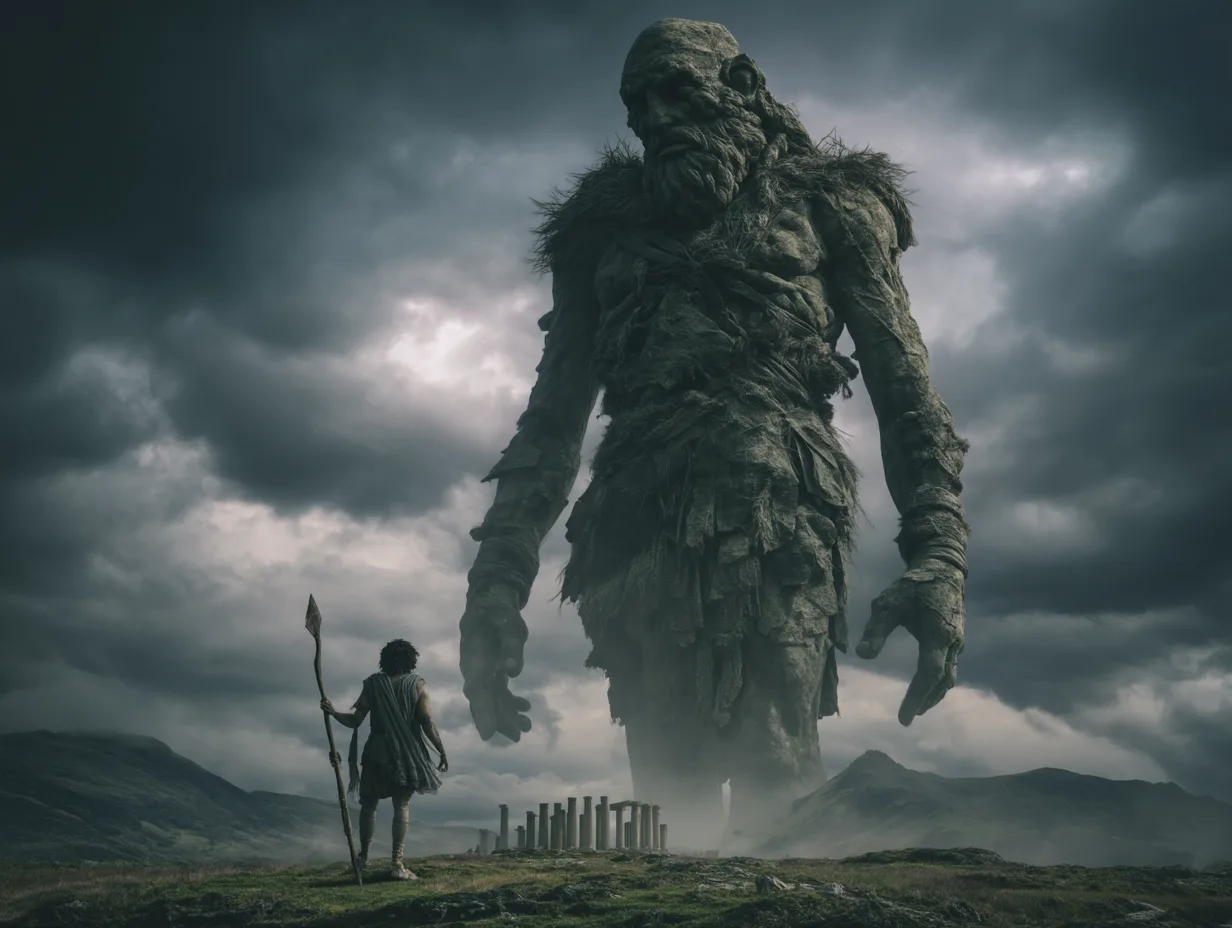
The Enoch Nephilim Connection begins with four puzzling verses in Genesis and unfolds across centuries of Jewish and Christian interpretation. Genesis briefly places extraordinary figures before the Flood, while 1 Enoch develops their story through rebellious angels, violent giants, and divine judgment. Consequently, readers encounter not one settled doctrine but a continuing argument about evil, knowledge, and the boundaries between heaven and earth.
The Enoch Nephilim Connection in Genesis 6
Genesis belongs to the canonical Hebrew Bible and Christian Old Testament, whereas 1 Enoch generally belongs among the pseudepigrapha. Genesis 6:1–4 names the Nephilim but offers little explanation about their identity or fate. Therefore, later interpreters asked whether the sons of God meant angels, kings, warriors, or members of Seth’s righteous lineage.
Genesis 6:4, in the King James Version, reads:
There were giants in the earth in those days; and also after that, when the sons of God came in unto the daughters of men, and they bare children to them, the same became mighty men which were of old, men of renown.
The King James Version renders the Hebrew Nephilim as giants, while many modern translations retain the Hebrew name. Some interpreters connect the word with the Hebrew root n-p-l, meaning to fall, and consequently describe them as fallen ones. However, etymology alone cannot prove whether the name indicates fallen angels, their offspring, or simply formidable ancient people.
Within the Enoch Nephilim Connection, ancient Near Eastern traditions give the passage a broader cultural setting. However, no single parallel matches Genesis at every point. Mesopotamian and Canaanite stories often connect divine beings, heroic rulers, and exceptional offspring; Gilgamesh, for example, has a partly divine ancestry. Therefore, Genesis may engage a familiar mythic world while directing attention toward violence, mortality, and the coming Flood.
Second Temple Origins and the Book of the Watchers
Unknown Jewish authors composed 1 Enoch in stages during the Second Temple period, mainly in the Hellenistic age. Historical study of the Enoch Nephilim Connection therefore starts with the Book of the Watchers, chapters 1–36. That section contains the earliest full surviving narrative about the angelic descent. Moreover, its preserved manuscripts point to circulation among Aramaic-speaking Jewish communities before Christianity.
The Aramaic fragments from Qumran Cave 4, catalogued as 4Q201–4Q212, include copies written around 200–150 BCE. Moreover, Greek fragments from Egypt and a complete Ethiopic tradition preserve additional forms of 1 Enoch. These witnesses let textual criticism compare languages, variants, and stages rather than treating the work as one modern book.
Although the work speaks through Enoch, Genesis’s antediluvian patriarch, scholars classify it as pseudepigraphal because later authors wrote under his name. Pseudepigraphy gave ancient writers an authoritative voice located before the Flood and before Moses. Meanwhile, Enoch’s heavenly journeys made him an ideal mediator who could explain cosmic secrets, judgment, and history.
The larger collection contains several units with different themes and probable dates. For a broader map of those visions, The Book of Enoch Explained follows the symbolism of Watchers, giants, and heavenly realms. Accordingly, readers should distinguish the Book of the Watchers from later Enochic sections instead of assuming uniform authorship.
How the Enoch Nephilim Connection Expands the Story
In 1 Enoch 6–11, two hundred Watchers descend and swear a binding oath on Mount Hermon. Semyaza leads their collective decision to take human wives, while Azazel becomes prominent through his dangerous instruction. Their children grow into enormous, voracious warriors who consume human resources, attack living creatures, and fill the earth with blood.
The story develops through a clear sequence:
- First, the Watchers cross a divinely appointed boundary and choose human partners.
- Next, the giants exhaust ordinary food before turning their violence against humanity and creation.
- Meanwhile, angels teach metalworking, weapon making, cosmetics, sorcery, astrology, divination, and other secret arts.
- Finally, Michael, Raphael, Gabriel, and Uriel report the crisis, and God commands judgment before the Flood.
This version of the Enoch Nephilim Connection does more than enlarge Genesis with colorful details. Because illicit instruction accompanies illicit unions, the account explains warfare and moral corruption through a rupture in cosmic order. Moreover, its treatment of cosmetics and celestial knowledge reflects anxiety about power without wisdom, not a simple rejection of every craft.
The narrative assigns different punishments to the rebels and their offspring. Raphael confines Azazel in the desert, other Watchers await final judgment, and Gabriel sets the giants against one another. Therefore, the Flood cleanses a world damaged by both supernatural transgression and human participation rather than answering ordinary human wickedness alone.
Enoch receives the Watchers’ petition, yet his intercession cannot reverse their sentence. Instead, his visionary ascent confirms that heaven will deny them peace and that their children will die. This reversal matters because the angels who once transmitted secret knowledge must now depend upon a human messenger for an answer.
For a focused account of the rebels, Who Are the Watchers compares their leaders, teachings, and punishments. Likewise, The Watchers and the Nephilim follows the narrative into the fragmentary Book of Giants. Together, these traditions show how ancient scribes kept revising one troubling biblical gap.
Forbidden Knowledge, Demons, and Cosmic Order
The Watcher myth presents sin as more than private human disobedience. Azazel teaches weapons and metalworking, while other angels disclose enchantments, root cutting, astrology, and signs in the natural world. Consequently, heavenly knowledge becomes destructive when its teachers violate proper limits and place specialized power inside a culture already sliding toward violence.
Yet the story does not condemn technology through a timeless formula. Rather, its hermeneutics links particular arts with domination, seduction, bloodshed, and unauthorized revelation. Modern comparisons with artificial intelligence, genetic engineering, or nuclear technology can provoke discussion, although those analogies remain interpretations rather than the ancient author’s explicit message.
Within the Enoch Nephilim Connection, dead giants leave evil spirits that trouble humanity until final judgment. This account supplies an origin for demons that Genesis never gives and later demonologies could adapt. Therefore, evil persists after the bodies vanish, connecting primordial violence with suffering in the reader’s present world.
The scheme also differentiates moral agents instead of collapsing them into one category. Watchers initiate the breach, giants magnify violence, humans learn corrupting skills, and obedient archangels execute judgment. However, the narrative still leaves difficult questions about responsibility, especially when ordinary people inherit consequences from heavenly rebellion.
Canonical Echoes in the Enoch Nephilim Connection
Several canonical biblical passages preserve memories of giants without repeating Enoch’s complete explanation. Numbers 13:33 reports Nephilim in Canaan through frightened Israelite spies, who compare themselves to grasshoppers. Some scholars read that report as a memory of ancient giants or unusually tall local peoples, while others emphasize the spies’ fearful exaggeration.
The following texts frame the tradition differently:
- Canonical Genesis 6:1–4 supplies the brief union, the Nephilim, and the mighty men before the Flood.
- Canonical Numbers 13:33 connects Nephilim language with the Anakim encountered in Canaan.
- Pseudepigraphal 1 Enoch 6–16 names the Watchers, their teachings, their giant children, and their sentences.
- Apocryphal or pseudepigraphal Jubilees 7–10 retells the rebellion and emphasizes Noah’s struggle against surviving spirits.
- The apocryphal Book of Giants expands giant warfare, individual characters, and disturbing dreams in Aramaic fragments.
The Book of Giants survives only in fragments, including material among the Dead Sea Scrolls and later Manichaean witnesses. Its giants receive ominous dreams, fear approaching destruction, and seek interpretation within the Enochic world. For additional context, Giants in Ancient Texts compares these figures without pretending every giant tradition shares one origin.
Jubilees likewise treats the Watcher story as an explanation for post-Flood spiritual danger. Noah prays for protection, and the narrative permits a fraction of the spirits to remain under Mastema’s authority. In contrast, Genesis offers no comparable demon origin, showing how apocryphal interpretation answered questions left open by the canonical account.
These classifications also depend on religious community. Most Jewish and Christian canons exclude 1 Enoch, but the Ethiopian Orthodox Tewahedo Church receives it as canonical scripture. Thus, the labels apocryphal and pseudepigraphal describe broad scholarly or confessional patterns, yet they should not erase genuine differences among living traditions.
New Testament Reception and the Church Fathers
Early Christians inherited the Enoch Nephilim Connection through Jewish apocalyptic literature. The canonical Letter of Jude directly invokes Enoch’s prophecy and describes angels who abandoned their proper realm. Moreover, 2 Peter connects sinning angels, confinement, Noah, and the Flood in a sequence closely resembling Enochic judgment.
Jude 6, in the King James Version, reads:
And the angels which kept not their first estate, but left their own habitation, he hath reserved in everlasting chains under darkness unto the judgment of the great day.
Second Peter 2:4, in the King James Version, reads:
For if God spared not the angels that sinned, but cast them down to hell, and delivered them into chains of darkness, to be reserved unto judgment;
First Peter 3:19–20 also mentions spirits in prison near a reference to Noah, so many interpreters connect them with the Watchers. However, the passage permits other readings, and the New Testament never retells the entire Enochic narrative. Careful comparison therefore establishes literary resonance without forcing every phrase into one fixed system.
Justin Martyr and Tertullian accepted angelic sin as a useful account of corruption and demonic activity. Later, Augustine favored the Sethite interpretation, identifying Genesis’s sons of God with Seth’s human lineage and the daughters with Cain’s. Consequently, Latin Christianity often reduced the supernatural reading’s influence, even though Enochic echoes remained in scripture and popular imagination.
The R. H. Charles translation at Sacred Texts offers public access to a major historical English edition. However, readers should compare modern critical translations because manuscript discoveries and philological work followed Charles’s 1917 volume. Translation choices matter especially for names, measurements, damaged passages, and technical terms within the apocalyptic visions.
Manuscripts, Interpretation, and Modern Culture
Modern scholarship approaches the Enoch Nephilim Connection through textual criticism, comparative mythology, anthropology, and the history of religions. Aramaic fragments confirm the tradition’s pre-Christian Jewish setting, while Greek and Ethiopic witnesses reveal its long transmission. Meanwhile, comparisons with Mesopotamian apkallu, or primeval sages, suggest cultural exchange without proving simple literary dependence.
Anthropological readings often treat giant stories as ways to remember catastrophe, establish ethnic boundaries, or imagine a violent past. Literary readings instead emphasize narrative structure, symbolic excess, and the relation between heavenly rebellion and earthly disorder. Neither method can recover every authorial intention, but both discourage simplistic claims about archaeological proof for enormous human skeletons.
Popular culture freely reshapes this material. Darren Aronofsky’s Noah from 2014 portrays stone-bodied Watchers helping Noah, while the Darksiders games imagine Nephilim as hybrid angelic warriors. Fantasy writers, including Ted Dekker and Madeleine L’Engle, also draw upon Enochian ideas, although their creative worlds should not serve as evidence for ancient beliefs.
These adaptations keep the giants culturally alive because the story joins spectacle with recognizable ethical fears. Forbidden knowledge can resemble uncontrolled technology, and hybrid beings can dramatize anxiety about unstable identities. Nevertheless, historically grounded reading first asks what Second Temple authors meant before applying their images to current debates.
Reading the Enoch Nephilim Connection Today
A productive reading holds canonical and apocryphal texts beside one another without flattening their differences. Genesis leaves ambiguity, whereas 1 Enoch constructs an elaborate cause of violence and a supernatural framework for the Flood. Consequently, the comparison reveals ancient hermeneutics at work: later writers expanded sparse scripture to address new intellectual and moral pressures.
Study groups can organize the evidence through a short chronology:
- Begin with canonical Genesis 6:1–4 and note every detail the passage states or withholds.
- Then read pseudepigraphal 1 Enoch 6–16 and map each Watcher, teaching, offense, and punishment.
- Next compare Jubilees 7–10 and the Book of Giants, marking agreements and narrative innovations.
- Finally examine Jude 6, 2 Peter 2:4, and 1 Peter 3:19–20 for later canonical echoes.
This method separates observation from speculation before discussion turns toward theology. For example, participants can ask whether forbidden knowledge itself causes evil or whether rebellion corrupts otherwise useful knowledge. They can also compare Enoch’s restricted visionary authority with modern hopes for more inclusive access to religious interpretation.
Frequently Asked Questions
Does Genesis say that every giant descended from an angel?
No, Genesis 6 remains brief and ambiguous, while 1 Enoch explicitly makes the giants children of Watchers and human women. Therefore, readers should not silently import every Enochic detail into the canonical passage.
Is the Book of Enoch part of the Bible?
Most Jewish and Christian traditions treat 1 Enoch as pseudepigraphal or apocryphal rather than canonical. However, the Ethiopian Orthodox Tewahedo Church includes it within its broader canon.
Did ancient readers connect the Nephilim with demons?
First Enoch explains demons as spirits surviving from the dead giants, and later traditions developed that idea. In contrast, canonical Genesis never supplies this origin story.
Do the Dead Sea Scrolls prove that the giants existed?
No, the scrolls prove that ancient Jewish communities copied and read Enochic traditions. They provide manuscript evidence for beliefs and texts, not physical evidence for gigantic beings.
Giants of the Past and Questions for the Present
The Enoch Nephilim Connection remains compelling because it transforms a biblical riddle into a searching account of power, violence, and accountability. Yet its contradictions matter as much as its answers, since Genesis, Enoch, Jubilees, and later Christians frame the crisis differently. Readers can therefore keep asking how communities use old revelations to explain evil while recognizing the boundary between history, interpretation, and faith.
Check out the author’s book here: The Book of Giants.
Leave a Reply