Pilgrimage to Vézelay and a Contested Sacred Memory
A Pilgrimage to Vézelay leads through Burgundy’s rolling hills toward a town shaped by devotion, architecture, and historical uncertainty. The Basilica of Sainte-Marie-Madeleine dominates the ridge, drawing religious pilgrims and curious historians into the same luminous nave. However, the journey follows traditions about Mary Magdalene rather than a securely documented route from first-century Judea to France.
That distinction makes Vézelay more compelling because medieval communities built sacred geography from relics, stories, rituals, and repeatedly traveled roads. Therefore, a Pilgrimage to Vézelay reveals both a place of prayer and evidence for how Christians remembered an enigmatic disciple. Her reputation changed as canonical testimony, apocryphal literature, preaching, and local claims met across centuries.
Although no manuscript proves that Mary walked the town’s streets, its stones preserve the history of people who believed her presence mattered there. Meanwhile, the surrounding landscape encourages the slower attention that pilgrimage traditionally demands. A visitor can admire Romanesque art while asking how memory becomes place, authority, and communal identity.
Mary Magdalene in Canonical and Apocryphal Texts
The four canonical Gospels provide the earliest surviving Christian narratives about Mary Magdalene. They place her among Jesus’s followers, near the crucifixion, and at the empty tomb. Moreover, John gives her a decisive role as the first person to announce the risen Jesus to the disciples. John 20:18, in the King James Version, reads:
Mary Magdalene came and told the disciples that she had seen the Lord, and that he had spoken these things unto her.
The canonical texts never call Mary a prostitute, although later Western preaching merged her with other Gospel women. That durable misconception influences popular art and modern expectations about repentance, while Vézelay inherited the canonical witness and an evolving devotional image. For a closer examination, Mary Magdalene: Unveiling the Misconceptions separates the biblical portrait from subsequent identification.
Later apocryphal writings ask different questions through teaching, vision, and authority, and the Gospel of Mary provides a crucial example. This apocryphal Christian work survives mainly in a fifth-century Coptic manuscript copied from an earlier Greek composition. Scholars often place the original composition in the second century within a diverse Mediterranean Christian culture. The Gnostic Society Library translation and introduction provides the surviving text and manuscript context.
In that gospel, Mary comforts fearful disciples and recounts teaching that she received through vision. Peter then challenges whether the Savior truly spoke privately with a woman, while Levi defends her. Therefore, their dispute makes interpretation and leadership central problems, which The Gospel of Mary: Insights into Early Christian Mysticism explores without treating its inward language as canonical history.
Other apocryphal works, including the Gospel of Philip, likewise amplify Mary’s symbolic importance. These texts belong to different communities, dates, and theological settings, so readers should resist combining them into one biography. Moreover, “gnosis” names saving knowledge in several ancient movements, not a single uniform church. Unveiling the Gnostic Gospels offers wider context for those manuscripts and their modern reception.
How Vézelay Claimed Mary Magdalene’s Relics
A Pilgrimage to Vézelay rests on medieval relic tradition rather than first-century documentation about Mary. According to local belief, guardians brought her remains to the abbey during the ninth century, protecting them during political turmoil. Later monastic promotion strengthened that association and attracted pilgrims from across Europe, creating religious prestige, economic activity, and a durable regional identity.
Relics gave medieval worshipers a tangible relationship with holy people and sacred history. A bone, cloth, or tomb could focus prayer because Christians regarded bodily remains as signs of continuing communion. However, authenticity often depended on testimony, institutional authority, and accepted tradition instead of modern archaeological evidence. Vézelay’s claim belongs within that religious world, where devotion and documentation followed different standards.
The competing Provençal tradition places Mary’s final years and resting place near Saint-Maximin-la-Sainte-Baume. According to its legend, she traveled to Gaul after Christ’s resurrection and preached there. Yet historians debate both French relic claims because neither follows securely from the canonical or earliest apocryphal sources. The rivalry reveals how several communities could map one saint’s memory onto their own landscape.
This uncertainty need not force a choice between unquestioning belief and casual dismissal. Instead, it invites a historical question about what relic traditions accomplished for the people who maintained them. They connected local churches with apostolic beginnings and placed remote towns inside universal Christian history. Thus, a shrine could carry social meaning even when its physical evidence remained disputed.
Basilica Architecture, Light, and Medieval Hermeneutics
Builders constructed the present Romanesque basilica largely during the twelfth century to serve worshipers and expanding pilgrimage crowds. Its long nave, rounded arches, striped masonry, and carved capitals guide the body and eye, while carefully arranged light changes the interior. Therefore, a Pilgrimage to Vézelay turns movement through the building toward the altar into a form of interpretation.
Sculpted capitals present biblical scenes, moral conflicts, plants, creatures, and allegorical figures. Medieval viewers did not necessarily separate decoration from theology, because images supported preaching and contemplation. Therefore, stone could function as visual hermeneutics for audiences with varied levels of literacy. Visitors today can examine those carvings slowly, tracing how artists joined scriptural narrative with symbolic imagination.
The great portal reflects a Christian world larger than Burgundy through imagery of mission, peoples, conversion, and the church’s cultural reach. However, modern viewers should recognize that medieval images can encode fear and hierarchy alongside spiritual aspiration. Close attention allows admiration without turning the past into a harmless fantasy.
UNESCO includes the basilica and hill among the world’s significant cultural sites, citing their relationship with medieval pilgrimage and Romanesque art. The official Vézelay, Church and Hill listing supplies an authoritative overview of that designation. Nevertheless, institutional recognition confirms the site’s historical importance without settling the relic question or proving Mary Magdalene’s physical presence.
Pilgrimage to Vézelay in Medieval Europe
During the Middle Ages, Vézelay became an important gathering point on routes toward Santiago de Compostela. The Way of Saint James linked shrines, roads, hostels, markets, and religious communities across Europe. Consequently, pilgrims encountered landscapes through repeated practices of walking, hospitality, danger, prayer, and exchange. The road created cultural connections while each traveler carried a distinct motive.
Vézelay also entered crusading history when Bernard of Clairvaux preached the Second Crusade there in 1146. Because that event placed the hill within political violence as well as devotion, an honest visit should hold beauty and conflict together. Pilgrimage sites gathered rulers, preachers, merchants, penitents, and ordinary travelers under unequal conditions.
Several elements shaped the town’s medieval prominence:
- The claimed relics drew worshipers who sought Mary Magdalene’s intercession and spiritual nearness.
- The Santiago route connected Vézelay with a much wider network of European pilgrimage.
- Bernard’s preaching in 1146 tied the hill to the history of the Second Crusade.
- Monastic ritual, art, hospitality, and commerce sustained the town around recurring pilgrim traffic.
Today’s traveler making a Pilgrimage to Vézelay inherits layered paths but cannot simply reproduce a medieval experience. Modern roads, historical research, tourism, and personal freedom change the journey’s conditions. Even so, walking creates time for sustained attention and bodily fatigue, making a Burgundy path a practice of inquiry without granting every claim equal evidence.
Walking a Pilgrimage to Vézelay: Basilica, Crypt, and Hill
Entering the basilica, visitors first encounter scale, alternating stone, and an unusual clarity of light. The nave’s soaring rhythm encourages forward motion while side spaces invite quiet pauses. Meanwhile, the crypt focuses attention on the relic tradition that made the abbey famous. Some visitors pray there, whereas others study the shrine as an artifact of medieval devotion.
Neither response requires certainty because reverence forms part of the site’s history, and skepticism can coexist with respect for worshipers. Furthermore, the disputed relics raise enduring questions about presence, memory, and proof. The crypt makes those abstractions physical through enclosure, silence, ritual, and proximity.
Outside, cobblestone streets and ancient houses preserve much of Vézelay’s medieval character. Small shops offer handmade crafts, religious art, and local food, while museums and exhibitions interpret regional art and pilgrimage history. Beyond the walls, paths reveal broad Burgundy views alongside plaques and statues that mark the town’s continuing pilgrim heritage.
The Chemin de Saint-Jacques, or Way of Saint James, extends the visit beyond a single monument. Walking even a short section places the basilica within a network rather than treating it as an isolated destination. Moreover, changing weather and terrain encourage attention to pace, limits, and companionship, conditions that often shape reflection more effectively than a fixed program.
Mary Magdalene, Mysticism, and Spiritual Authority
Christian tradition has associated Mary Magdalene with devotion, repentance, divine grace, and personal transformation. Yet those themes developed through interpretation, art, and conflated identities as well as canonical passages. The canonical resurrection accounts emphasize witness and faithful presence more clearly than sexual sin. Apostle to the Apostles: Reclaiming Mary Magdalene’s Authority follows the importance of that witness for later Christians.
The Gospel of Mary shifts attention toward vision, inner stability, and contested teaching. Although apocryphal, it preserves evidence that some early Christians imagined Mary as an authoritative interpreter. Peter’s resistance also exposes anxiety about who may transmit revelation. Mary Magdalene and Peter: Analyzing the Conflict in Gnostic Texts examines that disagreement across related writings.
Canonical and apocryphal sources therefore offer different kinds of evidence. Canonical Gospels shaped the church’s public scripture, while pseudepigraphal and apocryphal works illuminate communities outside later boundaries. Neither category automatically answers every historical question about Mary herself. However, reading both helps explain why her memory could support competing images of penitent, witness, visionary, and teacher.
For modern pilgrims, the contradictions can become part of spiritual reflection rather than an obstacle. A person may honor Mary’s courage without accepting every medieval legend about her remains. Likewise, someone making a Pilgrimage to Vézelay may study the basilica critically while responding to its beauty. Such openness suits a figure whose legacy crosses boundaries between scripture, imagination, institution, and dissent.
Planning a Thoughtful Pilgrimage to Vézelay
Practical preparation gives the visit enough space for attention, and sturdy walking shoes help on cobblestones and nearby paths. Layered clothing suits changing conditions, while a guidebook or audio tour can clarify architecture, biblical scenes, and the basilica’s symbolism. Additionally, a journal may capture questions that emerge slowly during walking or silence.
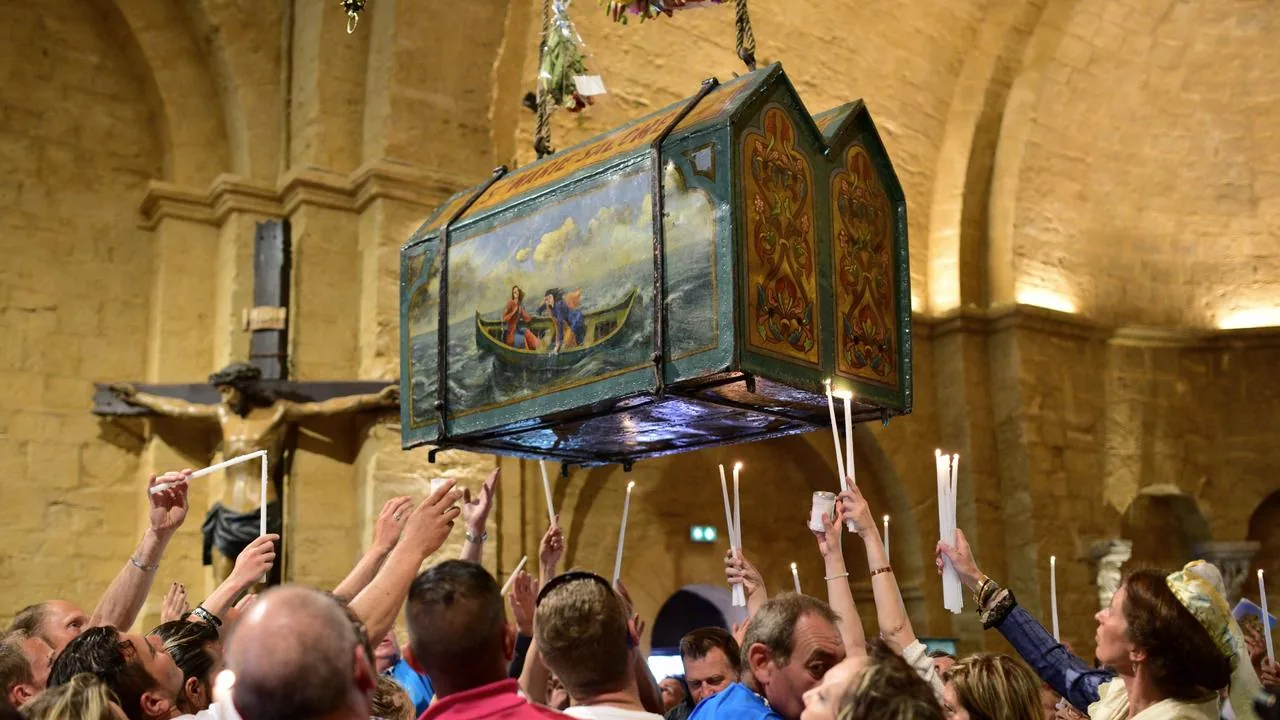
Religious festivals dedicated to Mary Magdalene can add processions, special prayers, and community gatherings to the experience. However, those dates may also bring larger crowds and reduced quiet inside the church. Travelers should therefore choose between communal celebration and solitary reflection according to their purpose, since either can support a meaningful encounter.
Pilgrim guesthouses and monasteries may provide simple lodging and conversation, whereas other accommodations offer greater privacy or flexibility for exploring Burgundy. Booking ahead makes particular sense during festivals and busy travel periods. However, visitors should also leave unplanned time for the basilica, local museums, artisans, and countryside paths.
Reflection materials can help without crowding every quiet interval, and a prayer book may guide religious visitors through periods of silence. Meanwhile, historical notes support close observation, while canonical passages beside apocryphal accounts sharpen important differences. The journey gains depth when preparation opens questions instead of scripting a required emotional result.
Frequently Asked Questions
Are the relics at Vézelay certainly Mary Magdalene’s remains?
No surviving first-century evidence establishes that identification, and historians continue to debate the tradition. However, the claim shaped Vézelay’s medieval importance and remains central to its religious memory.
What is the difference between canonical and apocryphal accounts of Mary?
Canonical Gospels belong to the New Testament and present Mary as a follower and resurrection witness. By contrast, apocryphal works such as the Gospel of Mary portray later debates about revelation and authority.
Why does Provence also claim Mary Magdalene’s relics?
Saint-Maximin-la-Sainte-Baume preserves a competing tradition that links Mary’s later life with Provence. Neither French claim rests on secure evidence from the earliest Christian sources.
Can a nonreligious traveler make a Pilgrimage to Vézelay?
Yes, because architecture, manuscript history, medieval culture, and landscape offer substantial reasons to visit. Moreover, pilgrimage can describe disciplined attention and inquiry without requiring a particular confession.
Keep the Questions Walking
Vézelay does not resolve every contradiction surrounding Mary Magdalene, and its value need not depend on doing so. Instead, the hill holds scripture, apocrypha, relic devotion, Romanesque art, crusading history, and modern searching in productive tension. Finally, a Pilgrimage to Vézelay keeps those layers visible while inviting further questions about whose memories become sacred and why they endure.
Check out the author’s book here: The Gospel of Mary Magdalene.
Leave a Reply